
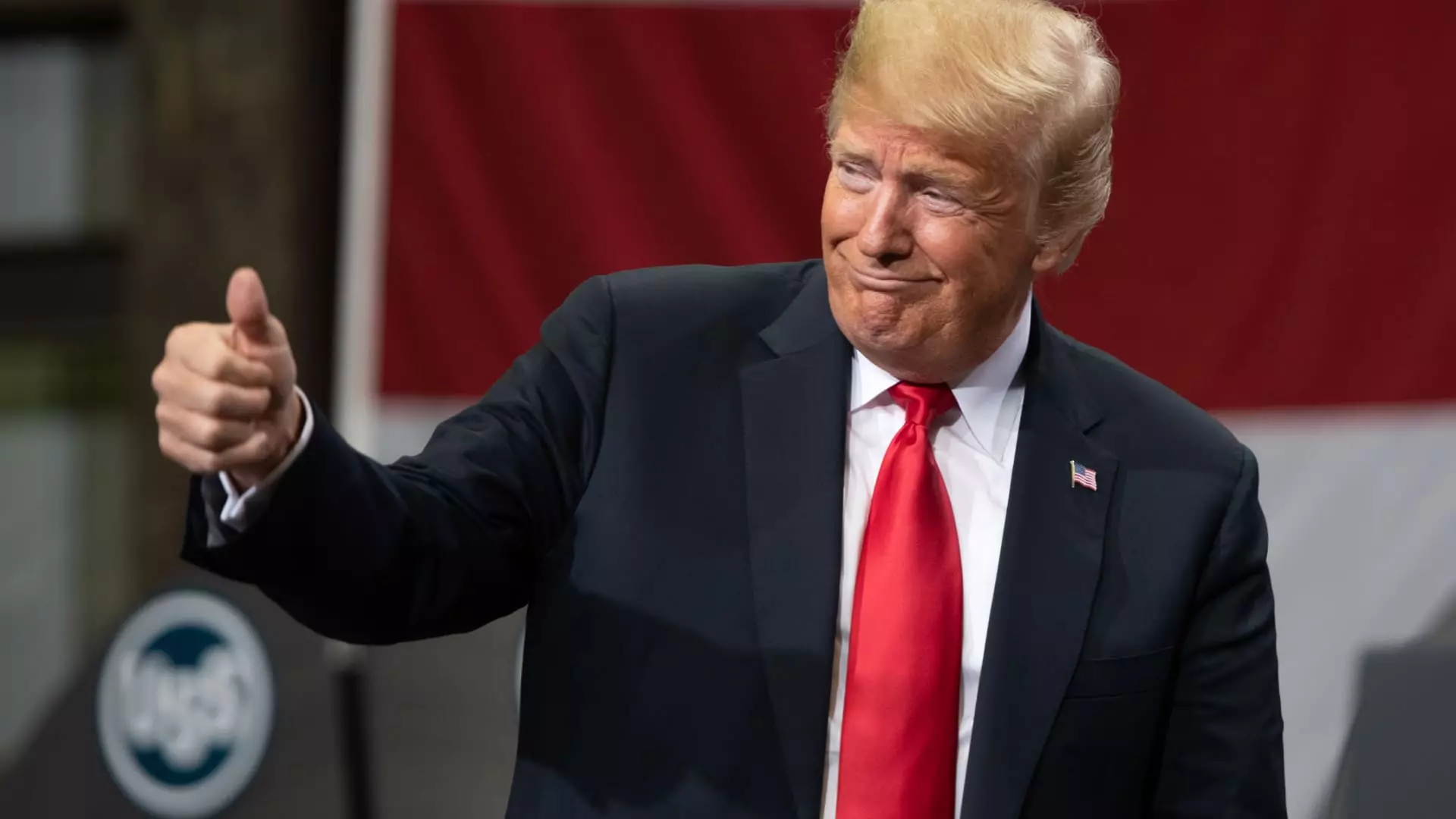
In an audacious move that epitomizes the intersection of populism and market speculation, former President Donald Trump took to Truth Social with an emphatic declaration to “buy stocks” shortly before the market surged in response to his easing of tariffs. While some saw this as savvy insider insight, it raises pressing concerns about the implications of a president encouraging citizens to gamble their fortunes based on whims rather than sound financial principles. It’s ironic how the political rhetoric, meant to instill confidence, can devolve into a reckless game of roulette, endangering the very investors it seeks to galvanize.
When Trump advised investors at 9:37 a.m. ET, he temporarily ignited a significant market surge, with stocks like the S&P 500 ETF Trust (SPY) growing by over 10% the same day. However, this stark juxtaposition between panic sales and sudden rebounds threatens the integrity of investment practices. The stock market’s volatility mirrors the constant fluctuations of pop culture and sensationalism, turning long-term investing into short-term speculation that only the savvy—or very lucky—can navigate.
The Hypocrisy of the Tariff Tango
The situation speaks volumes about the hypocrisy within political leadership. Just last week, Trump’s aggressive tariff measures had sent the market into a tailspin, much like a rollercoaster that is fun for thrill-seekers but can leave others dizzy and disoriented. The abrupt shift to ease these tariffs suddenly transformed the narrative. This isn’t merely poor political strategy; it’s almost blatant market manipulation. Encouraging the public to act on his personal stock interests, as evidenced by the reference to his initials “DJT,” sparks a troubling precedent that muddy the waters between public trust and private gain.
When politicians assume the role of market gurus, they blur the lines of ethical conduct and financial responsibility, reducing complex economic systems to a tweet or a social media post. The implications of this can ripple beyond individual gain or loss; they threaten to undermine the very fabric of the marketplace, making it susceptible to populist whims.
Investors as Pawns in a Broader Game
Trump’s actions convert ordinary investors into pawns, enabling a chaotic game of financial chess rather than a disciplined strategy. For every fortunate investment made on the back of his impulsive exhortations, countless others are left bearing the brunt of volatility. The fact that forums like Reddit’s WallStreetBets buzzed with excitement and skepticism illustrates this duality of hope and trepidation. Some even likened Trump’s antics to insider trading—a valid concern given the power dynamics at play.
While many were thrilled with short-term gains, others voiced frustration over the perceived machinations governing the market. One Reddit user called themselves “psychic,” highlighting the gambling mentality fostered by such haphazard investment advice. This isn’t a mere financial literacy issue; it’s emblematic of a larger culture that fetishizes quick wins over thoughtful investment planning.
The Illusion of Financial Freedom
What does it mean for “the little guy” when a former president’s whims can dictate market movements? While shouting “buy stocks!” might seem empowering, it overlooks the financial literacy gaps that plague the populace. The narrative surrounding empowered investing ignores the reality of the information asymmetry prevalent among average investors. Can everyday citizens leverage market opportunities, or are they merely puppets dancing to the whims of a political figure with vested interests?
In this light, it appears that Trump’s calls to action are laden with contradictions. While purporting to champion the common man in the face of bureaucratic obstacles, his utility as a market influencer subverts serious investment underway, reducing significant financial decisions to gut-feelings fueled by tweets. Ultimately, this undermines the hard-fought strides toward financial literacy and independence for individuals nationwide.
While inflating investor optimism may deliver short-term gains for ambitious risk-takers, it can also lead to disillusionment when the underlying principles of investment are circumvented. The normalization of such manipulation threatens not just individual portfolios but the overall trust in market mechanisms. With every tweet, we inch closer to a cultural shift where emotional bursts override analytical rigor, leaving financial security dangling in the balance.