
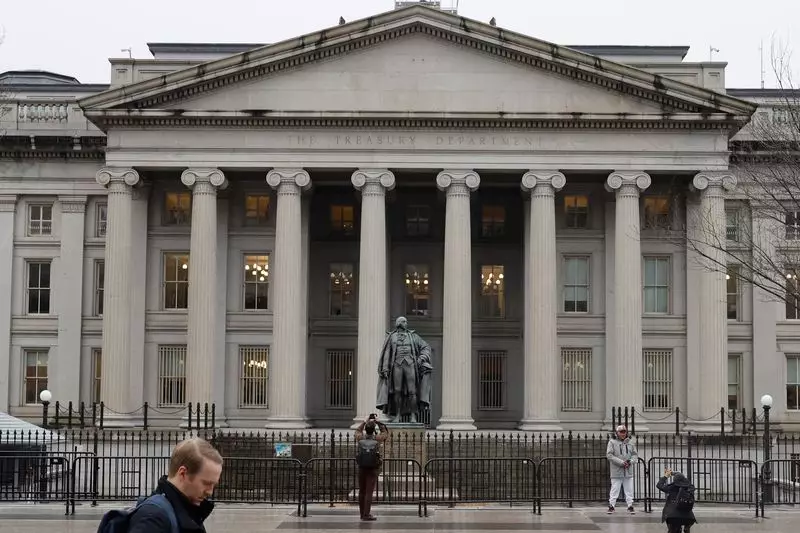
The U.S. federal budget for fiscal year 2024 is a staggering $6.8 trillion, raising crucial questions about the sustainability of government spending. Analysts highlight that significant reductions in this spending are highly unlikely due to a combination of structural and political challenges. Key areas of expenditure, primarily in mandatory spending programs, dominate the federal budget and make it resistant to cuts despite public calls for restraint.
Mandatory spending, which encompasses essential programs such as Social Security and Medicare, amounted to an impressive $4.1 trillion in 2024. This portion of the budget is particularly untouchable, largely due to its popularity and the potential political fallout from any reductions. For example, the Social Security program alone accounted for $1.4 trillion, reflecting its vital role in supporting millions of senior citizens. Similarly, Medicare costs reached $900 billion, emphasizing the pressure on the government to maintain these benefits amid escalating healthcare costs. Compounding this financial commitment, additional mandatory programs, including Medicaid, veterans’ benefits, and retirement payments, contributed an extra $800 billion.
Interest payments on the national debt represent another substantial financial obligation, totaling around $950 billion. Analysts assert that cutting these payments could lead to disastrous economic consequences, potentially triggering a financial crisis. Given that the national debt is projected to soar in the coming years, managing this financial burden will be crucial for the federal government moving forward.
Discretionary spending, which encompasses expenditures such as defense and other government services, reached $1.8 trillion, but offers only limited avenues for reductions. Notably, defense expenditures account for nearly half of this discretionary spending, amounting to 3% of GDP—a low point since the end of the Cold War. Current geopolitical tensions further complicate any potential cutbacks in defense spending, making it an unappealing target for lawmakers.
Any significant effort to curtail federal spending would necessitate action from Congress, a process that requires a formidable 60 Senate votes. Given the current political climate, achieving bipartisan agreement on spending reductions appears exceedingly difficult. While the President may have the authority to reverse executive actions, such measures would likely yield minimal savings in the grand scheme of a projected $26 trillion deficit over the next decade.
While there might be some marginal reductions in federal spending and employment, substantial cuts seem improbable in the near future. The interconnectedness and popularity of mandatory spending programs alongside the challenging geopolitical landscape underscore the complexities surrounding fiscal policy in the United States. Finding a pathway to a more sustainable financial strategy will require innovative solutions and bipartisan cooperation that seems elusive at present. As the country grapples with its financial future, the realities of political discourse and public sentiment will continue to shape the federal budgeting landscape.