
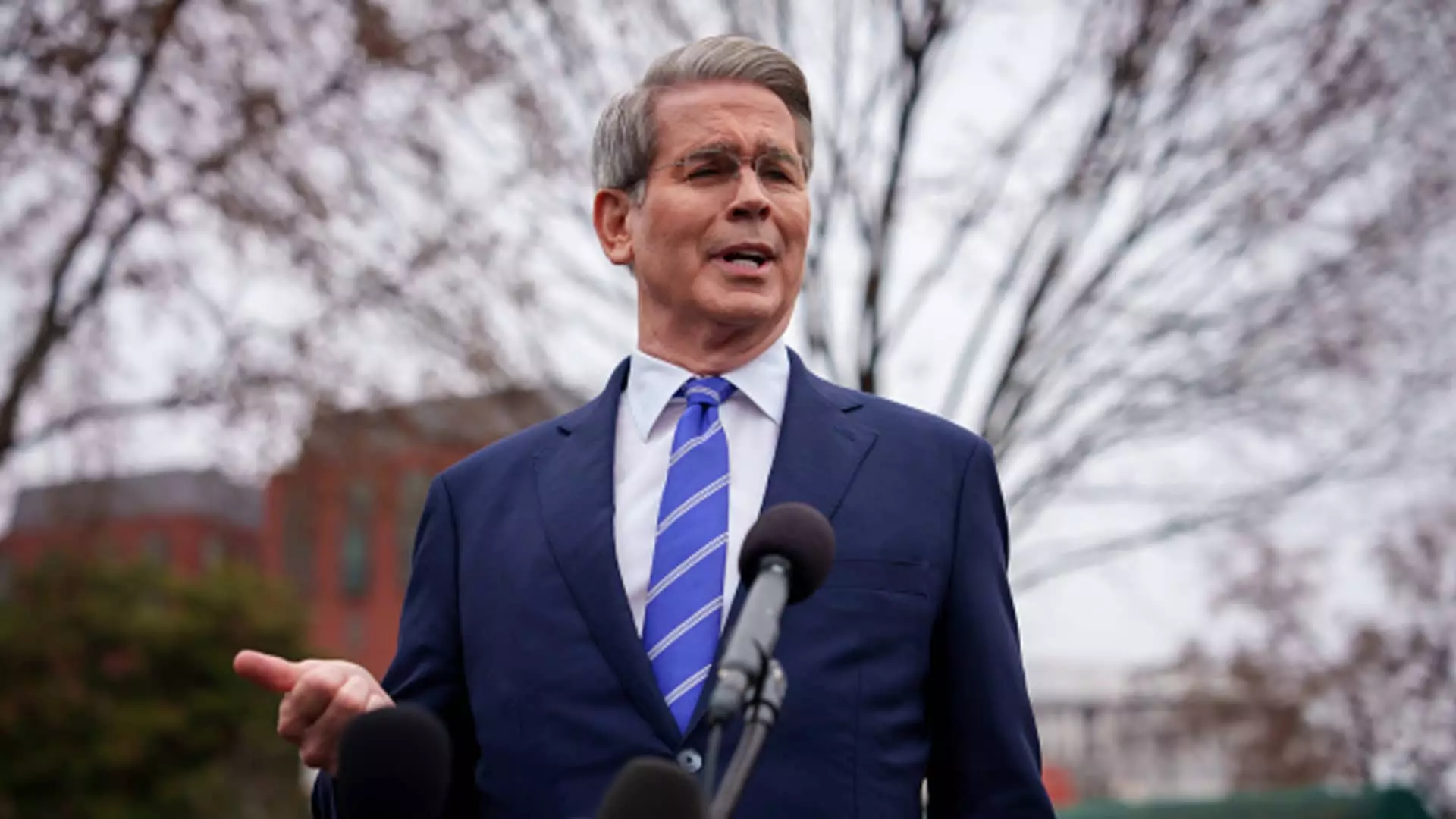
In the high-stakes realm of technology stocks, the recent turmoil has spotlighted how uprise and decline often intertwine. Secretary of the Treasury Scott Bessent recently emphasized that the current sell-off is tied more to the abrupt dip in the so-called “Magnificent 7″—the A-listers of the tech world—rather than the Trump administration’s aggressive protectionist policies. This perspective is intriguing yet myopic, as it disregards the broader economic implications of international trade dynamics. The hard truth is that while tech giants such as Apple and Amazon have driven the market’s growth, they are now also the harbingers of its volatility.
The “Magnificent 7” peaked largely thanks to speculation and unprecedented growth theories tethered to AI advancements and market dominance. However, the recent arrival of cheaper, innovative competitors like the Chinese AI startup DeepSeek has provoked a legitimate existential crisis among these monopolistic firms. This collapse is not merely a product of short-term fluctuations but a striking signal of shifting power in the tech landscape, entrenched by factors that go beyond just the rapidly evolving technology—factors like global economic sentiment, trade concerns, and the specter of inflation.
The Tariff Threat and Its Market Fallout
On a more macroeconomic level, the implementation of steep tariffs under President Trump’s reciprocal tariff policy has significantly destabilized market predictions. Bessent attempts to underplay these moves, framing them as inconsequential to today’s stock landscape, but the evidence suggests otherwise. The S&P 500’s immediate dive into correction territory can be traced back to investor panic—the kind that discounts growth due to protective measures that ostensibly aim to safeguard American industry but may endanger it in the long run.
The knee-jerk reactions to tariffs point to an inherent fragility in market sentiment, one that must be addressed if the administration hopes to maintain investor confidence. When the futures market experienced a dramatic plummet of nearly 4%, it underscored how quickly fears can materialize when economic policy tangles with investor psychology. The rapidity of these dips illustrates a crucial disconnect—a disconnect between government policies aimed at economic recuperation and the real-time responses from the market.
Resilience in Uncertainty
Yet, through this turmoil, there exists a silver lining, albeit a complicated one. Bessent asserts that if we cultivate the right economic conditions, we can weather the storm. While this notion may seem overly optimistic, there is merit in strategic foresight. What the market needs now is a robust and conducive climate for investment fostered by a balanced approach that encourages innovation while being mindful of socio-economic implications.
In times like these, it is essential to re-evaluate the role of government interventions. Striking a judicious balance between innovation and regulation is the key to long-term sustenance in any market, particularly one as volatile as tech. The threats posed by external competitors like DeepSeek cannot be dismissed—they represent a wake-up call for American innovation to evolve, adapt, and fortify its standing in a global context.
These tumultuous times invite both peril and opportunity, demanding that we take an introspective look at our economic strategies and chart a comprehensive path forward—one that embraces adaptability and resilience over simply reacting to market whims.