
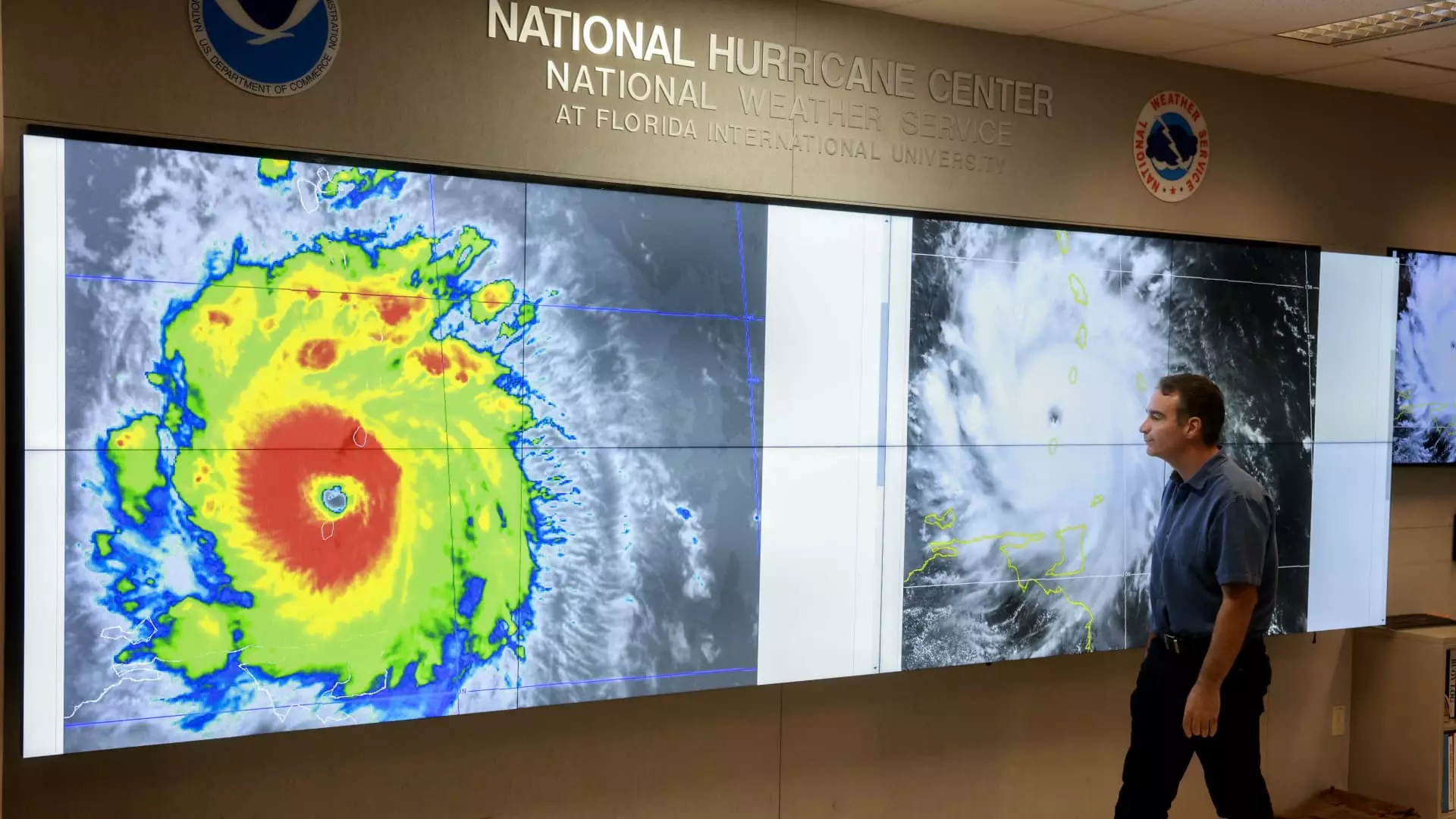
In a striking revelation, government scientists have unveiled a prediction that the 2025 hurricane season may skew perilously towards disaster, with a staggering 60% chance of it being above average. The National Oceanic and Atmospheric Administration (NOAA) anticipates witnessing between 13 to 19 named storms, with winds clocking in at 39 miles per hour or higher. Four to six of these storms are expected to escalate into hurricanes, while at least three to five could achieve major hurricane status. As taxpayers, we should be profoundly concerned about what this means for our communities, ecosystems, and, most critically, the insurance industry tasked with providing safety nets in times of calamity.
Budget Cuts: A Dangerous Oversight
Laura Grimm, the acting administrator of NOAA, faced pointed questions about the repercussions of budget cuts affecting climate science, yet she deftly dodged these inquiries. While it is laudable that the NOAA remains committed to protecting lives, the broader implications of these budgetary decisions cannot be overlooked. In an age where climate change is exacerbating the frequency and intensity of natural disasters, the lack of robust funding for pertinent scientific research could prove catastrophic.
Grimm emphasized that the agency is fully prepared, but one must question whether preparedness alone suffices in a climate where anomalies are the new norm. As we witnessed during the tumultuous seasons of past years, even seemingly minor neglect can lead to catastrophic failures. This situation raises an unsettling dilemma: Are we truly equipped to handle what may come, especially when funding for crucial research hangs in the balance?
Mountain of Financial Losses
The financial implications of these climatic predictions are staggering. The previous year stood as a testament to our vulnerability; Hurricane Helene and Milton unleashed over $37 billion in insured losses, as reported by Aon. The resilience of the U.S. property casualty insurance industry, which experienced its best underwriting performance since 2013, may give us a temporary sense of security. However, the outlook for 2025 paints a grimmer picture, as natural disasters in California, particularly the January wildfires, are set to reap unimaginable costs exceeding $50 billion.
What’s alarming is that the Midwest is not immune either. The region has seen an onslaught of severe thunderstorms, which have led to 883 tornado reports so far this year—an eye-watering 35% higher than the average for this time. In mere months, storms have already led to an estimated $10 billion in insurance losses, with forecasts indicating that these figures are only likely to escalate.
The Insurance Industry: At a Crossroads
As Bill Clark, CEO of Demex, pointedly remarked, the mounting losses pose an existential threat to the insurance industry and its ability to deliver affordable policies to homeowners. Reinsurance costs for severe storm losses have soared to a 20-year high, boxing insurers into a corner where they can scarcely continue to transfer their burdensome losses. This precarious situation is further compounded by the undeniable truth that more and more individuals are flocking to climate-vulnerable areas, inflating the stakes and inciting calamity.
The insurance sector has been forced to become a vocal advocate for local and state efforts aimed at enhancing resiliency against climate-induced challenges. Whether it’s implementing better building codes or advocating for public works that fortify properties, the pressure is mounting for comprehensive strategies.
Learning from Katrina
Reflecting on the aftermath of Hurricane Katrina, the president of Jefferson County Parish, Cynthia Lee Sheng, underscored the transformative measures undertaken in Louisiana over the past two decades, which aimed to overhaul levees and flood defenses. The sobering statistic that for every dollar spent on mitigation, $13 is saved, is a clarion call for those who question the necessity of rigorous and proactive disaster preparations.
It’s been nearly twenty years since the devastating impact of Hurricane Katrina, which claimed 1,392 lives and reshaped disaster protocols. The lessons learned from past disasters remain ever-present, yet the struggle for communities to implement and sustain effective mitigation strategies endures. As we face the specter of an unpredictable future, one can only hope that historical lessons lead to actionable insights rather than mere rhetoric, lest we find ourselves trapped once again in the cycle of destruction and inadequate recovery.