
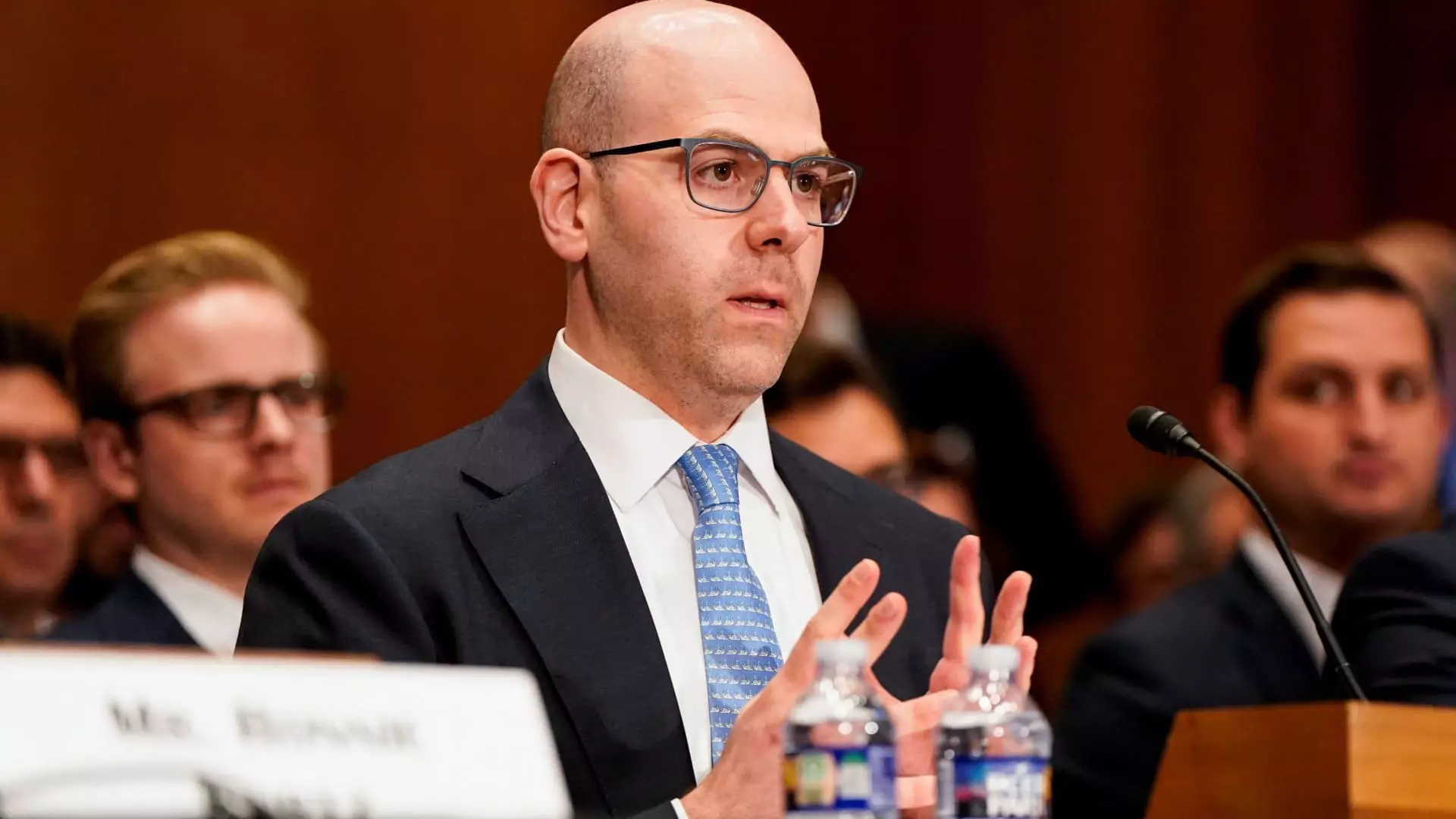
In recent months, the veneer of an independent Federal Reserve has shown alarming signs of deterioration. What was once considered a bastion of insulation from political whims now appears increasingly susceptible to external pressures, particularly from the Trump administration. Federal Reserve Governor Stephen Miran’s statements reveal a troubling trend: officials are subtly yet unmistakably being influenced by political figures, threatening the core principle that monetary policy should remain free from presidential interference. Miran’s assertion that he made his decision to oppose the rate cut independently, despite the President’s overtly partisan rhetoric, cannot mask the broader influence exerted behind closed doors.
Central banking’s independence is essential for maintaining economic stability. When politicians, especially those with a strong political agenda, begin to perceive the Fed as a subordinate, the risk of policy distortions increases exponentially. Miran’s refusal to bow to political pressure—even in the face of a leader known for his outspoken criticisms—speaks to a fragile balance. The fact that he was not pressured on his vote, but still feels compelled to clarify his independence, underscores an unspoken tension that no central banker should experience. The integrity of monetary policy hinges on the assurance that decisions are purely data-driven, immune from the caprices of political power.
The Double-Edged Sword of Political Engagement
President Trump’s vocal interventions into Fed policy have broken the conventions that traditionally kept government interference at bay. His penchant for publicly criticizing Chair Jerome Powell and seeking to influence interest rate decisions reflects an unprecedented level of political entanglement. Meanwhile, his attempts to identify potential replacements who favor easing monetary policy further threaten institutional independence. Such moves aren’t merely partisan posturing—they represent a strategic effort to shape the economic landscape to favor immediate political gains rather than long-term stability.
It’s clear that these interventions carry a deeper risk: the politicization of monetary policy could lead to unpredictable market reactions, increased volatility, and a loss of investor confidence. Investors and businesses rely on the Fed’s independence to make long-term plans; encroachment on this autonomy threatens to destabilize this delicate ecosystem. Conflicts of interest, whether perceived or real, threaten to reduce the credibility of monetary authorities. Miran’s comments about his term ending in January 2026 and his openness about potential resignations reveal a man aware that the independence he values is fragile and that political strings threaten to pull at the very fabric of central banking.
Institutional Cohesion Amidst Unprecedented Pressures
Despite the political tumult, Miran’s emphasis on collegiality and the professionalism of the FOMC paints a picture of resilience. His description of the atmosphere as “extremely welcoming” and “cordial” hints at a central bank workforce that, at least publicly, remains committed to the institutional norms of cooperation and independence. However, appearances can be deceiving. The underlying tension reflects a deeper insecurity about the future of monetary policy independence, especially with increasing external influences.
This scenario raises a critical question: can an institution designed to operate independently withstand the relentless political pressures it now faces? The risk is not immediate collapse but slow, corrosive erosion that could undermine America’s financial stability over time. The Federal Reserve’s credibility relies heavily on the perception that its decisions are solely based on economic data, not the political tides. If this perception is compromised, the ripple effects will be felt across markets and global economies, potentially leading to a cycle of policy erraticism driven more by political calculus than economic necessity.
The Final Word: A Call for Vigilance and Reform
The episode surrounding Miran and the broader discussion about the Fed’s independence are not just about individual personalities or isolated incidents. They are symptoms of a systemic vulnerability—one that demands careful scrutiny and, perhaps, meaningful reforms. Central bankers must be shielded from political influence if we are to preserve the credibility that underpins economic stability.
In a world teetering on the edge of economic unpredictability, the independence of the Federal Reserve should not be a privilege to be traded for political favor. It must be safeguarded, fiercely and unambiguously, lest the entire monetary framework designed to stabilize our economy be compromised by partisan ambitions. The authenticity of the United States’ financial policymaking depends on its ability to operate free from undue external influence—an ideal that is now more critical than ever to uphold.