
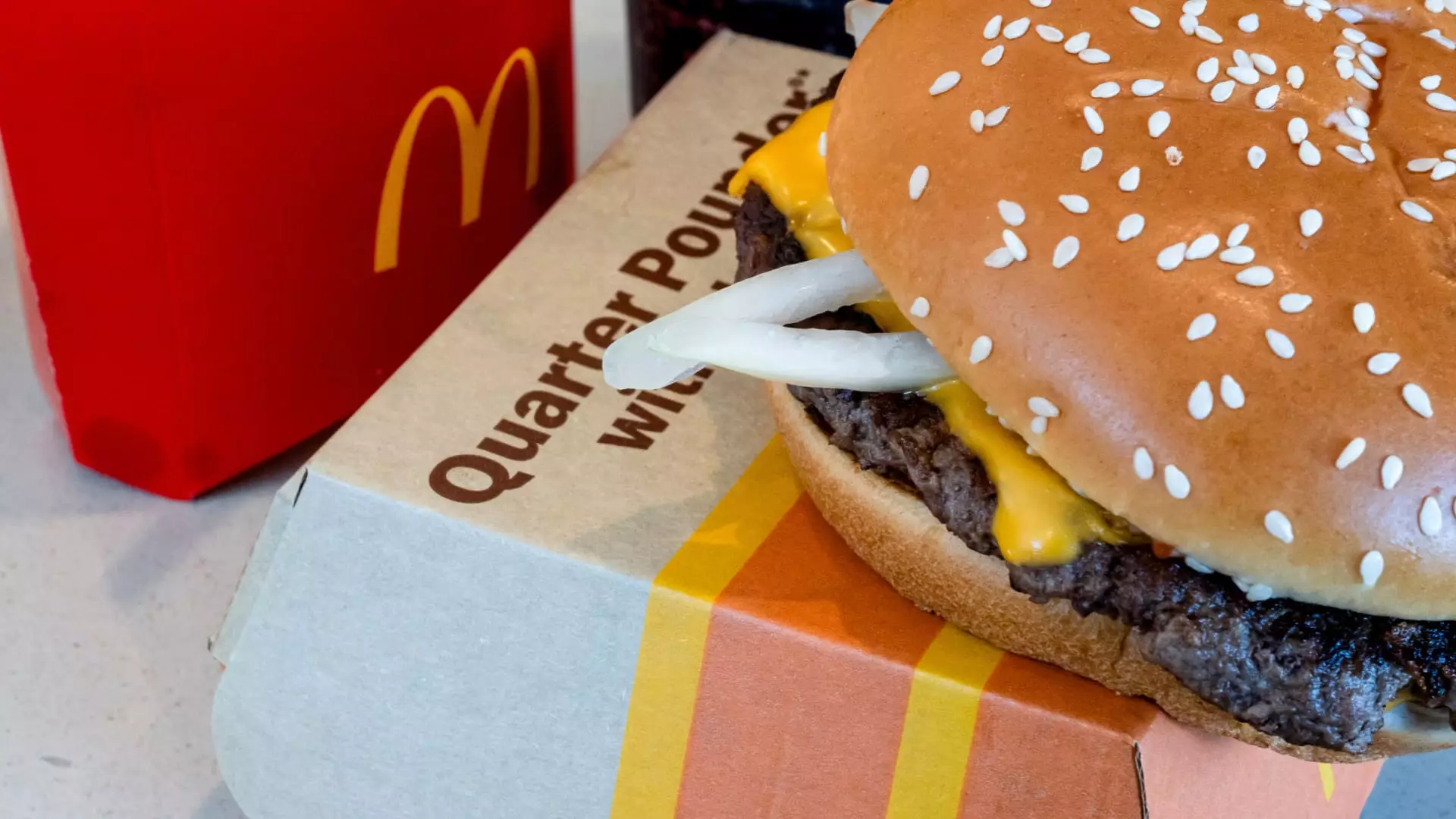
The emergence of a deadly E. coli outbreak linked to McDonald’s Quarter Pounder burgers has sent shockwaves through public health channels and raised significant concerns about food safety practices. The Centers for Disease Control and Prevention (CDC) reported that the outbreak has so far resulted in 75 confirmed cases across 13 states, with alarming statistics of 22 hospitalizations and one tragic death of an older adult in Colorado. This incident not only emphasizes the vulnerability of fast-food chains to foodborne illnesses but also unveils the potential repercussions on consumer trust and corporate accountability.
The reported cases ranged widely in age, with infected individuals between 13 and 88 years old, showcasing that E. coli does not discriminate between demographics. The CDC emphasized that the depicted numbers are merely the tip of the iceberg; the actual incidence is likely much higher. Many victims may experience mild symptoms that prevent them from seeking medical attention, hence they remain uncounted in official statistics. Moreover, the incubation period for E. coli can stretch three to four weeks, indicating that the outbreak’s timeline is still unfolding. As the CDC continues its investigation, it raises uncomfortable questions about the overall efficacy of current food safety measures and the swift identification of contaminated products.
The swift fallout from the CDC’s announcement was felt on Wall Street, with McDonald’s shares experiencing a 2% drop and losing 6% value since the outbreak was first made public. This decline illustrates the immediate financial implications of health crises for large corporations, especially those with essential menu items like the Quarter Pounder that contribute significantly to their revenue. In response to the outbreak, McDonald’s has implemented precautionary measures such as removing slivered onions, a suspected vector of contamination, from its supply chain in affected areas.
The company’s reluctance to comment extensively on the situation mirrors a common tendency in corporate behavior during crises. By initially upholding its prior statements, McDonald’s attempts to maintain an image of stability amid escalating fears regarding food safety. Nevertheless, the ongoing investigation into not only the onions but also the beef patties themselves implicates broader supply chain vulnerabilities that can emerge when food products are not carefully scrutinized.
Public Response and Market Reactions
As other fast-food chains like Burger King and Taco Bell have also pulled onions from their menus in light of the outbreak, it is evident that the specter of E. coli contamination raises alarm bells across the industry. Beyond immediate operational adjustments, the incident urges consumers to reassess their trust in established fast-food giants. In our increasingly health-conscious society, any indication of foodborne illness can quickly tarnish a brand’s reputation.
Despite this risk, market analysts suggest that the long-term damage to McDonald’s brand might be limited unless the outbreak escalates dramatically, drawing parallels to past incidents involving other fast-food chains. For instance, Wendy’s faced an E. coli outbreak two years prior, but the company managed to rebound following effective crisis management and public communication strategies.
Amid this crisis, McDonald’s remains committed to reassuring its customers that their food is safe to consume. The corporation’s ability to navigate through this turmoil will heavily rely on transparent communication, remediation of affected operations, and the enhancement of food safety protocols to prevent future occurrences.
As McDonald’s approaches its quarterly earnings report, stakeholders will be keenly analyzing the impact of the outbreak on sales and customer traffic. The recent trends of sluggish sales growth in the U.S. are compounded by an evolving consumer landscape that increasingly prioritizes health and well-being. The restaurant chain’s pivot towards value meals indicates an understanding of the market’s shifting dynamics, but the recent outbreak could complicate recovery efforts.
This outbreak highlights an urgent need for larger conversations surrounding food safety measures across the fast-food industry. As inquiries deepen and regulators scrutinize supply chain processes, it reveals that the fallout of such incidents can transcend financial losses, as they can redefine consumer relationships with national brands.
Ultimately, while the situation remains fluid, the lessons learned from this outbreak should ideally translate into improved practices and policies that not only safeguard public health but also assure customers that their favorite chains are committed to their safety. As investigations continue, the potential for systemic change in food safety standards remains one of the most critical outcomes this situation could produce, fostering an environment where the health of consumers is paramount.