
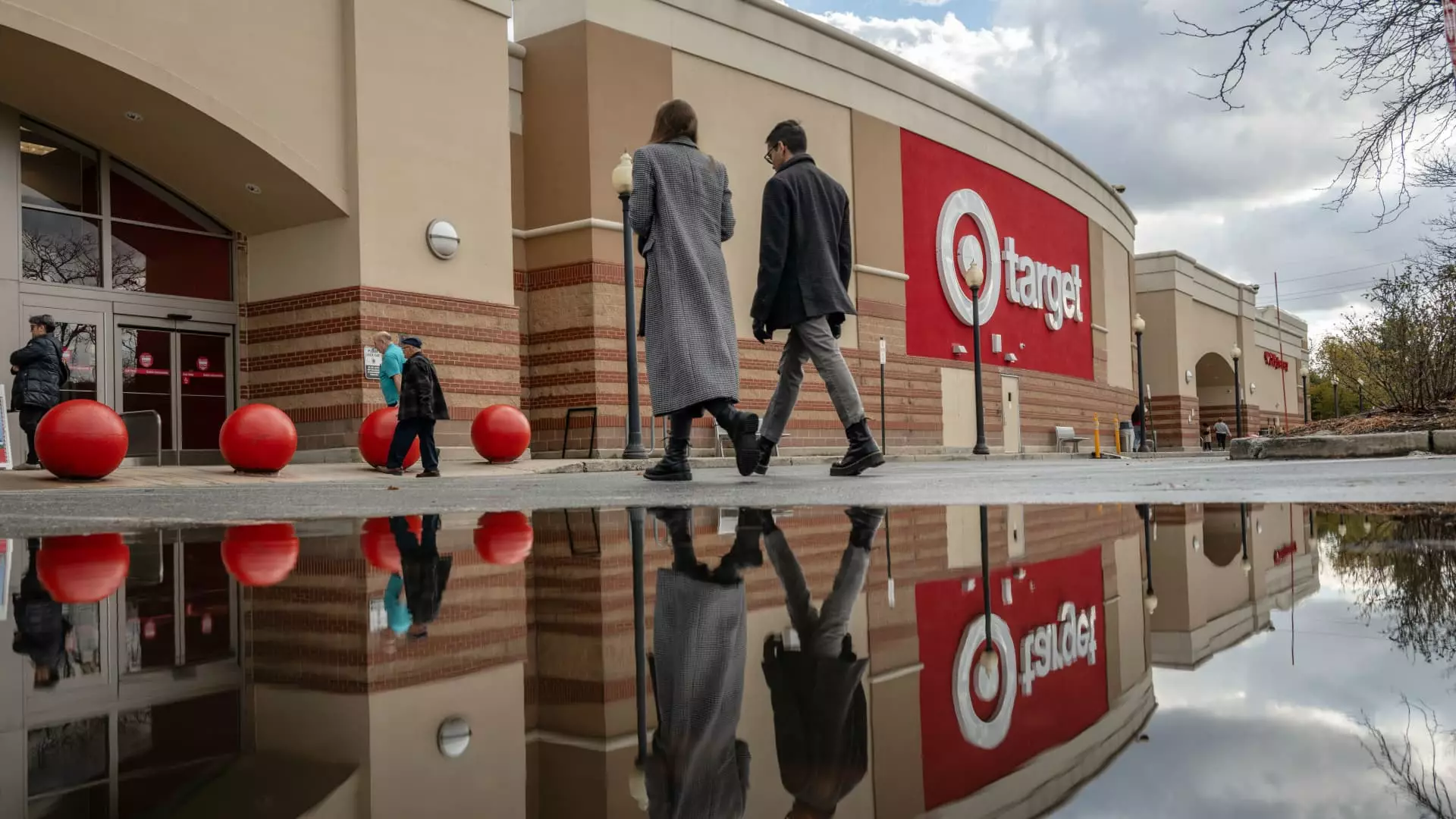
As the festive season approaches, retailers are navigating murky waters, attempting to draw in customers who are increasingly discerning about their spending. While the holiday shopping period traditionally signifies a surge in discretionary spending on items like clothing, cosmetics, and toys, not all retailers are basking in the glow of holiday cheer. Recent earnings reports have highlighted a stark division in the industry, showcasing a contrast between brands experiencing a sales boom and those grappling with disappointing figures.
Companies such as Target, Kohl’s, and Best Buy have announced lackluster third-quarter results, reflecting an inability to convert early holiday promotions into substantial sales boosts. This trend starkly contrasts with the performance of Walmart, Dick’s Sporting Goods, and Abercrombie & Fitch, which have reported strong quarterly sales. This bifurcation in retail success can be attributed, in part, to the inflationary pressures that have persisted over the past two years, compelling consumers to adopt a more cautious approach to spending.
Inflation has not only influenced consumer behavior but has also led to a reassessment of what constitutes essential versus discretionary purchases. As Neil Saunders, managing director of GlobalData Retail, observes, shoppers are willing to spend but are prioritizing their purchases more carefully. Instead of multiple smaller buys, consumers are opting for fewer, more meaningful items. This behavior naturally leads to a greater scrutiny of retailers, with consumers likely eliminating weaker options from their shopping lists.
A Moderate Outlook for Holiday Spending
The National Retail Federation (NRF) projects a modest increase in holiday spending this year, estimating a rise of only 2.5% to 3.5% in comparison to the previous year, totaling between $979.5 billion and $989 billion. While this marks an increase, it is significantly smaller than the 3.9% jump observed in the 2022 holiday season when spending figures reached $955.6 billion. Excluding sectors such as automobile sales, gas stations, and restaurants from this forecast helps paint a clearer picture of the retail landscape.
Retailers’ forecasts for the holiday quarter vary significantly. While Dick’s Sporting Goods and Abercrombie have raised their sales expectations and are optimistic about the coming weeks, Nordstrom and Walmart are exhibiting more cautious sentiments. For instance, Nordstrom’s CEO remarked on the slowing shopping trends towards the end of October, adjusting their forecasts accordingly, while Walmart acknowledged a good start to the season but warned that consumers remain price-sensitive and diligent in their spending.
Challenges for Retail Giants
Target and Kohl’s face steep challenges this holiday season, both in terms of sales expectations and broader market trends. Kohl’s has anticipated a more significant drop in sales than expected and is undergoing a leadership change just as the shopping season kicks off. Target’s outlook is similarly muted, projecting flat comparable sales despite employing creative tactics to entice shoppers. For example, Target plans to introduce over 150 items themed around Universal’s “Wicked” and exclusive releases for Taylor Swift fans during Black Friday, alongside substantial price cuts aimed at increasing foot traffic.
However, many analysts argue that retailers like Target and Kohl’s are operating in a tighter market environment, as they focus on items viewed more as luxuries rather than necessities. According to Saunders, this presents a challenge since consumers are displaying a preference for gifts that offer tangible, practical value rather than gimmicky or novelty items.
Inventory management has emerged as a crucial factor in the retail landscape this season. Reports suggest that some retailers have overshot their stocking needs or misjudged the mix of merchandise ahead of the holiday rush. For instance, Kohl’s is preparing for Black Friday with an array of clothing and small kitchen appliances, but without robust customer engagement, such an assortment could lead to inventory backlogs, resulting in price cuts and discounting.
Marshal Cohen, a chief retail advisor for Circana, emphasizes that the key to success this holiday season hinges on providing value—both through pricing and the perceived utility of products. He further notes that retailers often prepare to lay blame externally should their holiday results underperform, hinting at the systemic pressures impacting overall sales. This readiness to provide reasoning for poor performance can sometimes overshadow the inherent complexities retailers face in a competitive landscape.
As the holiday season unfolds, retailers are left to navigate a landscape rife with hurdles and opportunities. With shifting consumer expectations and an increasingly value-driven marketplace, retailers must adapt to not only survive but thrive. Brands that effectively leverage their understanding of consumer behavior, manage their inventory adeptly, and meet shoppers’ demands for value will be the ones to shine, while those caught in the trappings of outdated strategies may struggle to keep their doors open. It is clear that this year’s holiday shopping journey will require a delicate balance of innovation, responsiveness, and keen market awareness.