
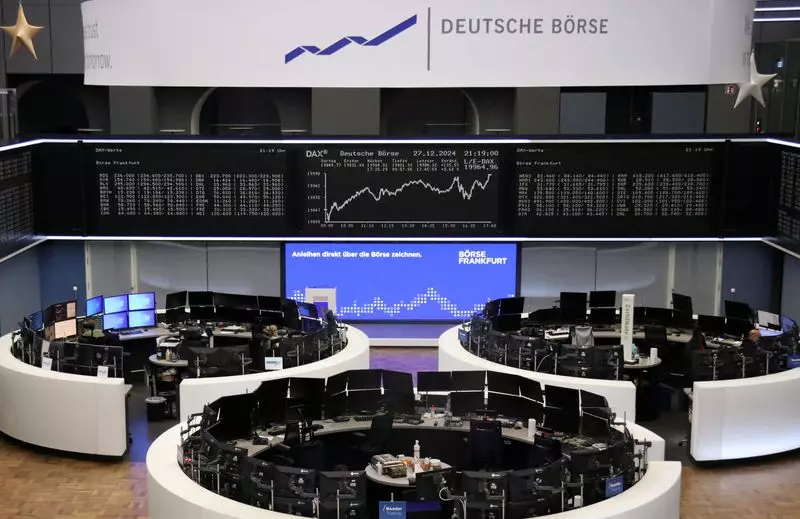
As the year comes to a close, European stock markets are experiencing a notable decline, mirroring the trends observed in Wall Street. On Monday, the pan-European STOXX 600 index fell by 0.6%, reflecting investor caution as government bond yields remain elevated. The trend indicates that, despite a generally positive year for many European markets, uncertainties surrounding interest rates and inflation are prompting investors to withdraw from equities. With the tech and healthcare sectors leading the downturn, investors seem increasingly wary of future economic conditions.
Thin trading volumes characterized the market as the New Year holiday approaches, with many exchanges closing for the holiday. Notably, markets in Germany, Italy, and Switzerland will remain shut on Tuesday, while the UK and French markets have a half-day session. This limited trading activity further emphasizes the reluctance of investors to engage heavily in the market during this transitional period. As such, the atmosphere appears muted, and the absence of robust trading could result in volatility as the market navigates the uncertain terrain.
The recent fluctuations in bond yields have played a significant role in shaping market sentiment. The yield on Germany’s 10-year bund, which approached levels not seen since mid-November, signals investor concerns about impending monetary policy changes. Influenced by rising U.S. Treasury yields and expectations surrounding inflationary policies, particularly in light of potential shifts in U.S. governance, these dynamics have compounded investor unease. Analysts suggest this environment creates a challenging backdrop for equity markets, where valuations remain under pressure amid tightening financial conditions.
Despite the current downturn, the STOXX 600 index is still poised for a remarkable 5.9% increase over the course of the year, with German stocks leading the gains while French shares underperform. This divide highlights the varying strengths of national markets, where Germany’s DAX index, despite a slight dip, is set to achieve a substantial 19% annual rise. In stark contrast, France’s CAC 40 is on track for a drop of 2.5%, driven largely by fiscal concerns and ongoing political instability.
In terms of sector performance, the food, beverage, and automobile sectors are expected to be the weakest performers this year, while the banking sector is faring better and likely to end the year on a positive note. This sector dichotomy raises questions about the broader economic landscape and where potential investment opportunities may lie in 2024.
As we transition into the new year, the focus remains on how global economic conditions will influence local markets. The notable performance disparities across sectors and countries underline the importance of remaining vigilant as investors navigate an intricate web of economic indicators and geopolitical risks. The ongoing implications of U.S. monetary policy and the trajectory of bond yields will likely dominate discussions as market participants reassess their strategies for the upcoming year. With volatility likely to persist, investors are advised to keep a close eye on both macroeconomic trends and sector-specific developments in order to maximize their investment potential.