
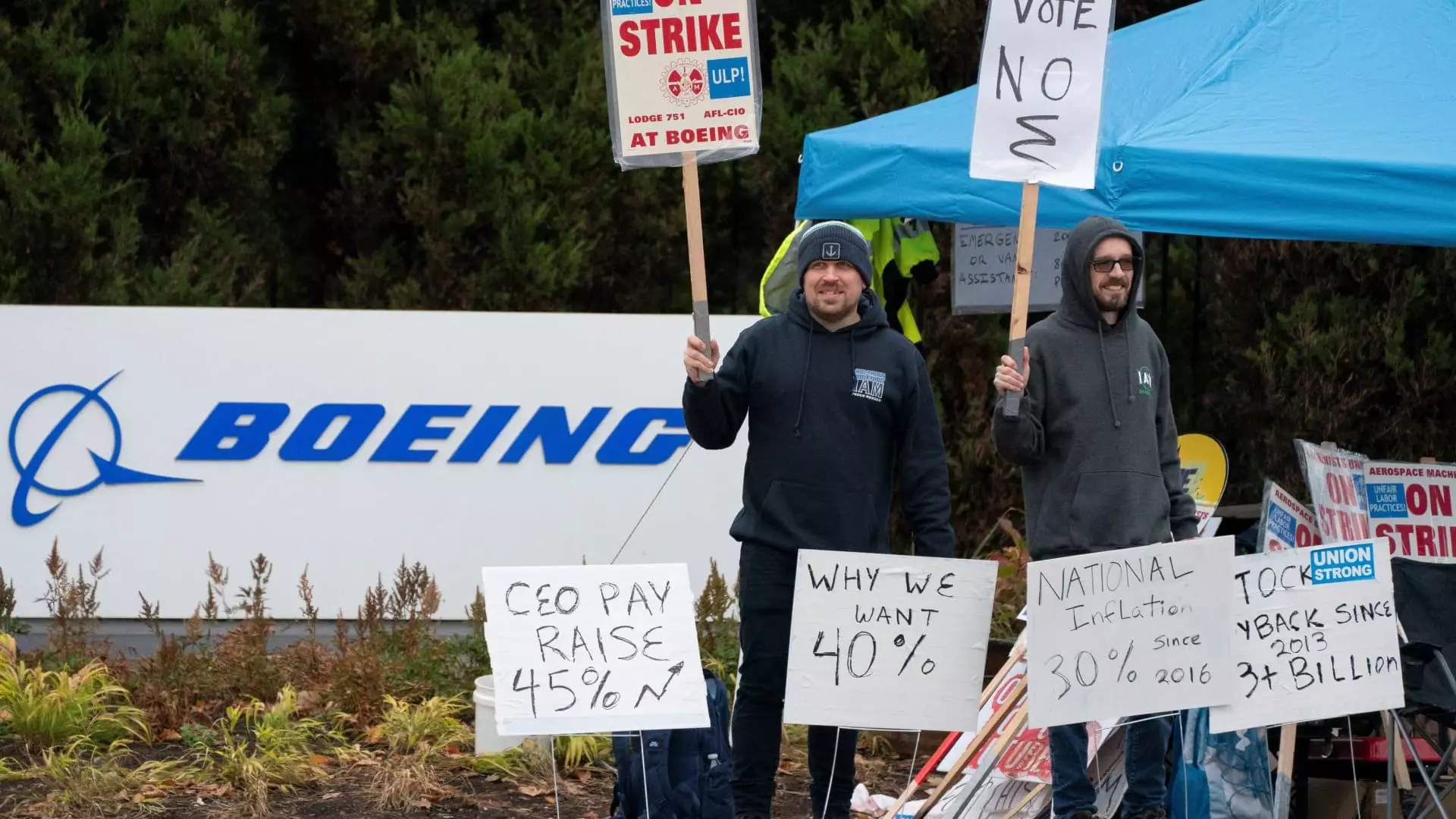
The protracted strike by Boeing’s machinists’ union, which began over seven weeks ago, is emblematic of the rising tensions between labor demands and corporate responses in America’s aerospace industry. This strike, precipitated by dissatisfaction with proposed wage increases and working conditions, has left a significant mark not only on Boeing’s operational capabilities but also on the broader economic landscape of the region. As the international sector still grapples with pandemic-related repercussions, the implications of this labor dispute extend far beyond the factory floors.
Details of the New Proposal
Boeing and the International Association of Machinists and Aerospace Workers District 751 have recently forged a new contract proposal aimed at resolving the labor standoff. The latest offer introduces a 38% wage increase distributed across four years, surpassing an earlier proposal by three percentage points. While this adjustment may provide some relief for employees, who have been vocal about the rising cost of living—especially in the competitive job market of the Seattle area—it raises questions about the sustainability of such gains in the long run. The union also presented workers with two incentive options: a one-time bonus of $12,000 or a previously offered package consisting of a $7,000 bonus alongside a $5,000 contribution to retirement plans. These proposed financial incentives suggest an awareness of the urgency to stabilize the workforce and restore production levels.
As highlighted by the union’s statements, the urgency for a resolution cannot be overstated. With Boeing facing mounting challenges—ranging from financial losses reported at over $6 billion in the last quarter to production delays exacerbated by labor disputes—the company is confronted with the pressing need to resume operations. The call for workers to accept the new agreement stems from the fear of encountering “regressive” offers should negotiations drag on. The recognition of collective sacrifices and achievements emphasizes the union’s strategic approach to return to work, signaling a pivotal moment for both labor and management to find common ground.
In an unprecedented twist, governmental influences have taken center stage in this labor dispute. The Biden administration’s involvement through Acting Labor Secretary Julie Su indicates the political stakes inherent in the negotiations. A resolution could have a cascading effect on U.S. employment figures, as seen in the recent jobs report that reflected negative trends correlated with the strike. President Biden’s endorsement of the union’s struggle underscores a broader narrative regarding labor rights in the current economic climate, hinting at potential shifts in how labor negotiations will be managed going forward.
The aerospace sector, heavily reliant on Boeing, is at a crossroads. As the company reassures its commitment to keeping production in the Puget Sound area, lingering frustration arises over the relocation of certain production lines, such as the 787 Dreamliner, to non-union facilities. These moves have sowed discord among workers who are acutely aware of the competitive landscape characterized by increasing job opportunities from tech giants in the region. The ongoing strike, therefore, not only encapsulates immediate labor concerns but also reflects broader dynamics in the labor market and the pressures workers face in a high-cost environment.
As the machinists’ union prepares to vote on the newly negotiated proposal, the outcome bears considerable weight for both parties involved. It represents an opportunity for Boeing to stabilize its workforce and re-align its operational priorities while acknowledging and rewarding the dedication of its machinists. Conversely, a rejection of the proposal could deepen the rift between labor and management at a time when the industry demands unity to recover from various setbacks. The resolution of this strike could set a precedent for labor negotiations across multiple industries, marking a decisive moment in the fight for fair wages and labor rights within the American workforce.