
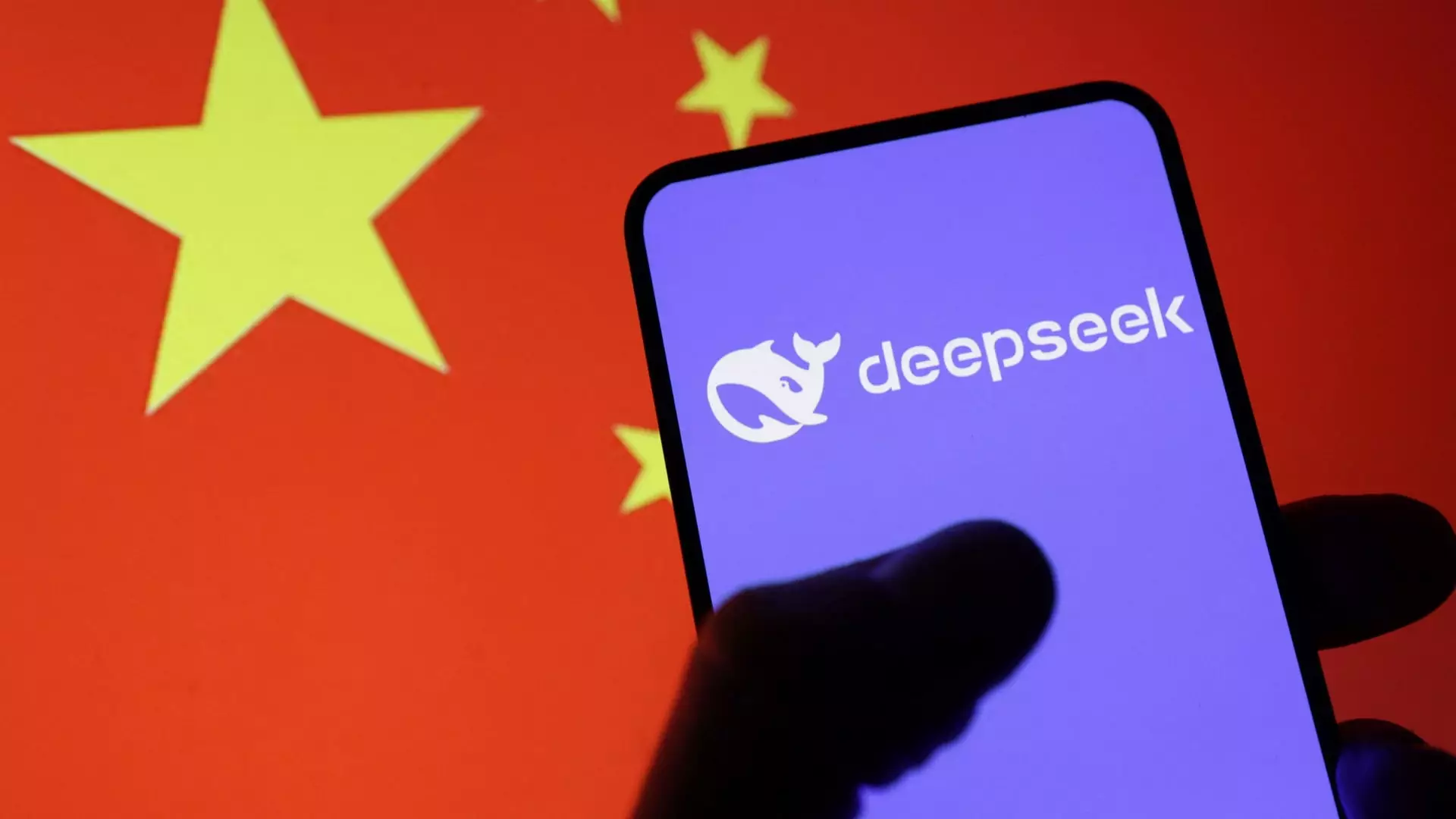
In recent months, China has demonstrated a striking shift in its technological ambitions, confidently asserting control over its innovation trajectory. The narrative of dependence on foreign technology, especially Western semiconductor chips and AI hardware, is slowly being replaced by a narrative of self-sufficiency. This transformation isn’t merely about economic resilience; it is a strategic move to diminish U.S. leverage and redefine global tech dominance. Chinese giants like Alibaba and Baidu’s stock surges are emblematic of a deeper belief that domestic innovation can substitute for imported technology. While many dismiss this as mere nationalist posturing, it’s painfully clear that China perceives international sanctions and restrictions, such as the Nvidia chip bans, as temporary hurdles rather than insurmountable barriers.
This pivot is simultaneously ambitious and audacious. It reflects a calculated gamble—one that involves heavy investments in homegrown chip production and artificial intelligence capabilities. China’s government is clearly betting on the notion that technological independence will cement its position in the global hierarchy. They are aware of the risks, but they see the potential reward: reclaiming control over critical infrastructure and setting the stage for future economic dominance. What’s compelling is that this move is not just reactive; it’s proactive. China is meticulously building an ecosystem where foreign dependence becomes an unnecessary crutch, diversifying supply chains and nurturing domestic champions poised to challenge Western supremacy.
The Rising Power of Chinese Chips and AI, and the U.S. Response
Chinese tech companies seem to be weathering the storm of U.S. restrictions. The optimism from analysts about Alibaba, Tencent, and Huawei surviving and advancing amid American restrictions demonstrates a strategic resilience. Chinese firms are diversifying their sources and accelerating investment in local alternatives, trying to create hardware solutions “good enough” to sustain their current momentum. This is no small feat; international sanctions, like the bans on Nvidia chips, initially threaten to cut off essential computing resources. Yet, Chinese firms are leveraging state backing, local knowledge, and aggressive R&D to chip away at American dominance.
This is a nuanced chess game. On the surface, restrictions seem to slow China’s AI drive, but in the long run, they catalyze a more profound shift: China’s realization that reliance on foreign hardware is a vulnerability, not a strength. Domestic chipmakers are being supported to reach competitive levels rapidly, challenging even the most advanced foreign players. The U.S.’s strategy of supply-side restrictions is inherently risky—it stimulates China’s push for self-sufficiency, which could diminish America’s influence over time. Moreover, China’s focus is not only on catching up but also on leapfrogging existing technological norms, especially in AI application development, which is pivotal for economic leadership.
Strategic Rivals or Disruptors? The Long Game of Self-Reliance
China’s aggressive pursuit of technological independence boils down to a complex balancing act. It is driven by a desire for sovereignty in critical sectors—semiconductors, AI, robotics, and automotive tech—while managing the practical limitations of access and capital. The government’s push into local industries—highlighted by bets on firms like Naura Technology, Inovance, and Xpeng—is a dual strategy of nurturing their growth while reducing exposure to foreign sanctions.
However, this approach is fraught with inherent risks. Building a self-sufficient supply chain takes time, and the current technological gap between China and the West remains significant. The “good enough” threshold might suffice for immediate needs, but future advancements depend on sustained innovation, talent acquisition, and strategic investments. Additionally, China’s regulatory environment and internal market dynamics can be unpredictable, casting doubt on whether the rapid acceleration will translate into long-term leadership.
From a policy perspective, the Chinese government’s “AI+” plan reveals a consciousness that artificial intelligence won’t just be a technological achievement but a core component of economic transformation. The push to integrate AI into every industry—automotive, manufacturing, robotics—might give China a competitive edge domestically, but whether this edge translates globally remains questionable. Western technology firms and policymakers should not underestimate China’s relentless drive; their long-term goal is not merely parallel development but a possible redefinition of global industry standards.
The Implications for Global Tech Leadership and Market Dynamics
China’s technological push is reshaping the global industry landscape. The willingness to challenge U.S. dominance through a combination of domestic innovation, strategic resource allocation, and political will signals a fundamental shift in how power and influence are wielded in the 21st century. This isn’t just about economic growth—it’s about geopolitical leverage.
Western policymakers must recognize that this is a strategic pivot, not a temporary setback. Their reliance on Western-controlled supply chains, particularly for advanced chips and AI hardware, could become a strategic weakness if China continues to build its capabilities at an accelerated pace. Much like the Cold War’s space race, technological supremacy here is intertwined with national security and global influence. American and allied tech industries need to recalibrate their strategies—either by investing aggressively in domestic production and innovation or by fostering more resilient, diversified global supply chains.
Meanwhile, Chinese tech companies are increasingly confident, not just in their technological abilities but in their strategic positioning. Their resilience against U.S. sanctions underscores a broader narrative: the globaltech leadership baton is splitting, and the race to dominate the next era of AI, semiconductors, and robotic automation is intensifying. If the current trajectory persists, the West risks losing its technological edge—unless it adopts a more assertive and flexible approach to innovation, investment, and regulation. China’s push toward self-reliance is undeniably risky, but in the current geopolitical climate, such risk appears to be the only way to secure a new, independent future.