
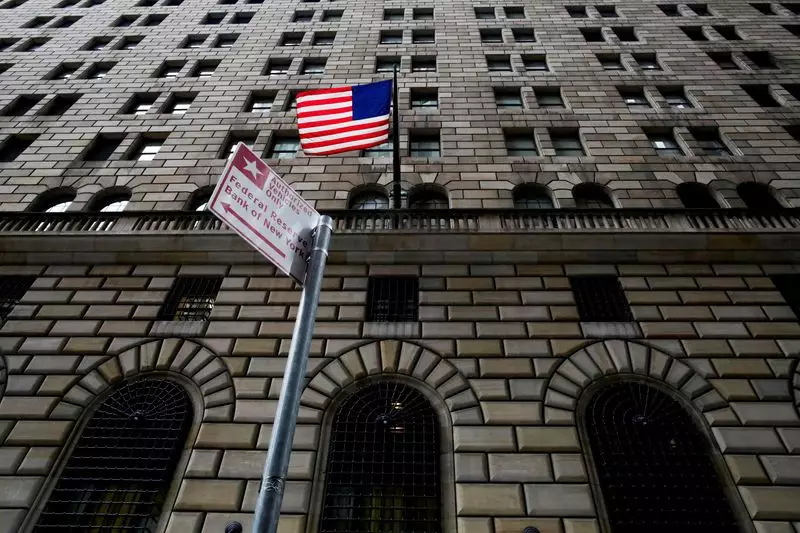
The interconnectedness of global markets means that shifts in economic policies in one country can trigger a cascade of reactions worldwide. Recently, the U.S. Federal Reserve’s remarks about interest rates have sent shockwaves through emerging market economies, prompting immediate responses from central banks in Brazil, Indonesia, and India, among others. This article delves into the implications of the Fed’s monetary policy, the vulnerabilities of emerging markets, and the strategies employed by central banks to stabilize their currencies.
At the heart of recent currency volatility are the Federal Reserve’s adjusted rate expectations. By implying a slower trajectory for interest rate cuts—revising predictions from four anticipated cuts next year to only two—the Fed has significantly affected investor sentiment. Moreover, the potential inflationary effects of incoming economic policies under President Trump, particularly regarding immigration and trade, have deepened the anxieties of global investors. This environment of uncertainty has driven U.S. Treasury yieldsand propelled the dollar to a two-year high against multiple major currencies, intensifying the pressure on emerging market currencies.
With the Fed’s decision looming large, various currencies in emerging markets suffered critical declines. The South Korean won dipped to a 15-year low, while the Indian rupee fell to an all-time record low. Most notably, the Brazilian real fell to a lifetime low before a series of interventions provided temporary relief. The phenomenon has resonated throughout market indices, with the MSCI index for emerging market currencies dropping to a four-month low. The ripple effects of these currency depreciations are not merely cosmetic; they indicate deeper troubles, such as increasing capital outflows and possible inflationary pressures as import costs rise.
In desperation, central banks across Asia implemented measures aimed at stabilizing their faltering currencies. For instance, India’s central bank initiated a dollar sale to prop up the rupee but only after it breached the significant psychological barrier of 85. The Bank of Brazil attempted multiple rounds of dollar interventions, with an initial $3 billion infusion not sufficiently supportive, resulting in an increased intervention of an additional $5 billion. These rapid responses underscore the angst among central bankers worried about the broader economic implications of rapid currency fluctuations.
Despite immediate interventions, the challenges for emerging market central banks are expected to persist. Economists evaluate that while short-term interventions can curb volatility, they are not a sustained solution. Fred Neumann of HSBC characterized these efforts as a temporary stopgap, necessitating longer-term adjustments in local monetary policies. The prevailing economic landscape suggests that central banks might need to prioritize inflation control over economic growth, complicating their operational frameworks.
The financial community has responded in kind to the Federal Reserve’s hawkish narrative. Emerging market currencies are being increasingly viewed as risky assets. Chris Weston, from Pepperstone, noted a return of FX traders to dollar long positions, signifying a broader reluctance to engage with weakening currencies. Analysts have cautioned that the enthusiasm for high-yield Asian currencies may diminish due to increasing volatility, which could jeopardize previously attractive carry trade strategies.
Additionally, the People’s Bank of China has been attempting to curb the yuan’s decline by adjusting the daily reference rate to stabilize the currency. However, these measures have had limited effectiveness, as the yuan remained at a 13-month low, further illustrating the broader challenges that central banks face amidst fluctuating foreign exchange demands.
As the Federal Reserve’s policies set the stage for a turbulent financial landscape, emerging markets find themselves in dire straits. The pertinent dialogue now revolves around how central banks should balance the competing demands of currency stability and economic growth. Moving forward, the confluence of rising U.S. interest rates, escalating inflationary pressures, and tactical central bank responses will shape not only the financial health of these nations but also the overall global economic structure. The need for structural reforms and sound monetary policy has never been more pressing to mitigate potential fallout from successive economic shocks.