
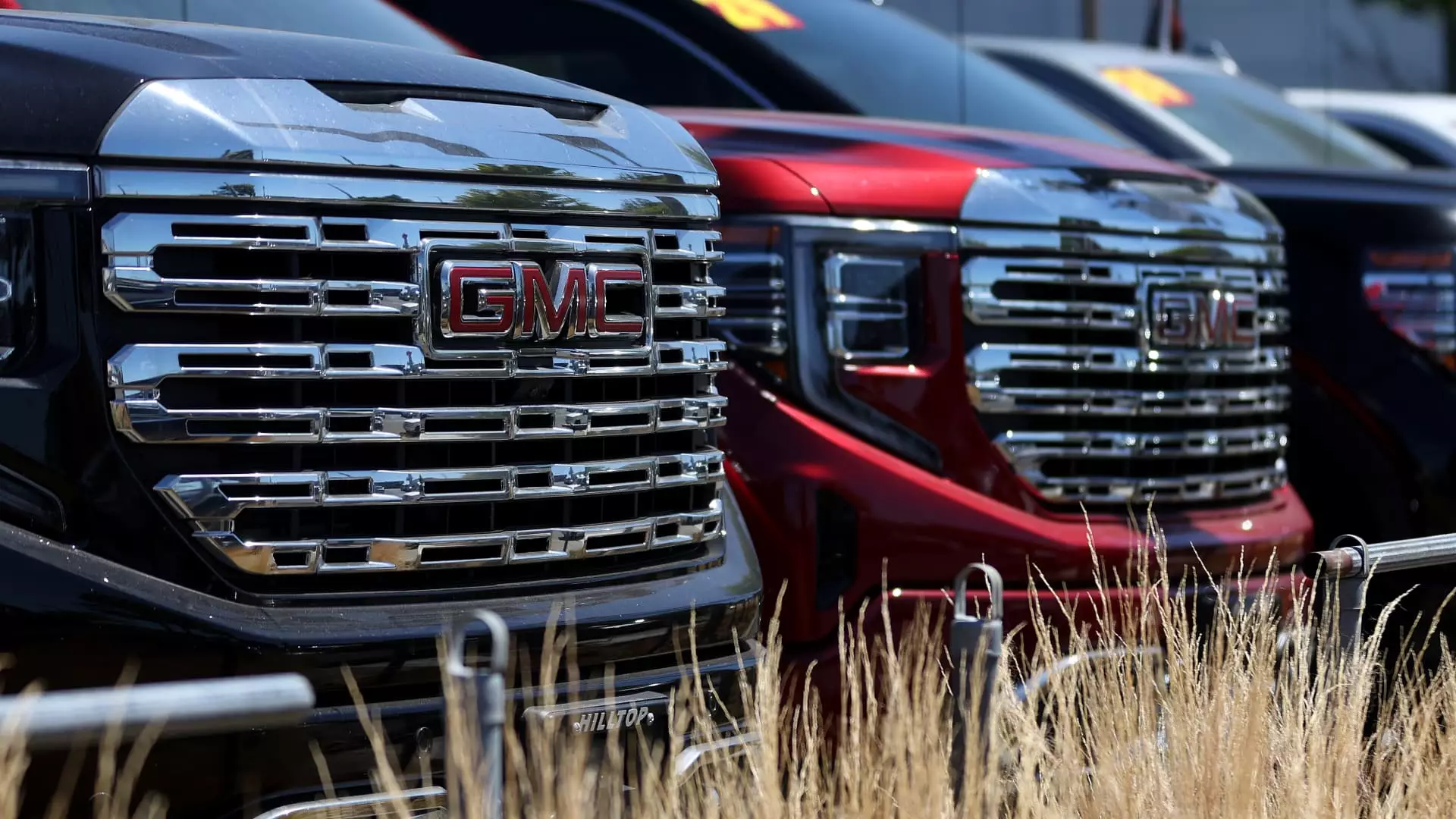
In the latest earnings report, General Motors (GM) has surpassed Wall Street’s projections, steering the company into a more optimistic future as it adjusts its forecasts for 2024. This performance in the third quarter marks a continuation of GM’s growth trajectory, evident from key indicators such as earnings per share and revenue. The corporation reported an adjusted earnings per share of $2.96 against the anticipated $2.43, alongside impressive revenue of $48.76 billion compared to the expected $44.59 billion. Such results exemplify GM’s adept handling of its operations, particularly in the North American market, which has become the cornerstone of its profitability.
In light of its strong performance, GM has raised its guidance for full-year adjusted earnings before interest and taxes to a range of $14 billion to $15 billion, signifying a clear upward trend from the previous estimates of $13 billion to $15 billion. This signals not only resilience but also a growing confidence within the management regarding the automaker’s financial health. The updated forecast for adjusted automotive free cash flow, now set between $12.5 billion and $13.5 billion, further underscores GM’s operational efficiency and financial strategy, particularly when you consider the hefty costs incurred in both labor and warranty claims that have been challenging for the industry.
Remarkably, GM has reported an outperformance against Wall Street expectations for nine consecutive quarters regarding earnings per share and eight quarters for revenue. This consistent success serves as a testament to the company’s solid performance and operational strategies. The third-quarter results revealed a net income of $3 billion, while revenues saw significant growth of 10.5% from the previous year’s $44 billion. The impressive transaction price per vehicle remained over $49,000, reflecting consumer demand and the efficiency of GM’s pricing strategies.
Even amidst these positive developments, GM is not without its hurdles. The company has been grappling with losses in its international markets, particularly in China, where it reported a loss of $137 million. This challenge is exacerbated by a significant drop in earnings from other international markets, which plummeted 88.2% year-over-year. Part of GM’s strategy going forward is restructuring its business in China to reclaim its foothold in a crucial market that has presented mounting challenges for automotive manufacturers.
While GM’s operational strategies have yielded remarkable results, the automaker faces rising pressure from increasing costs. The third quarter saw labor costs increase by $200 million, alongside a $700 million hike in warranty costs. Nevertheless, GM has managed to maintain a respectable adjusted profit margin of 9.7% in North America, showcasing its ability to navigate through financial turbulence and continue delivering profit to shareholders. The company’s proactive initiative to advance truck production from the fourth quarter has added an estimated $400 million in adjusted earnings, reflecting astute operational foresight.
As GM continues to build momentum, it remains focused on a couple of significant areas that were only briefly mentioned in its recent investor day discussions, particularly the future of its Cruise autonomous vehicle division and its strategies for electric vehicle sales. Cruise has reported substantial losses totaling around $1.3 billion through September of this year. This fate raises questions about GM’s long-term strategy for autonomous technology and how it will balance innovation with sustainable profitability.
GM’s recent quarterly results not only solidify its standing as a robust competitor in the automotive industry, but they also pave the way for a promising future. The company’s ability to raise forecasts while managing costs and navigating international challenges will be critical in maintaining its competitive edge. Investors will be keenly observing how GM leverages its strengths while addressing the distinct challenges posed by changing market conditions and consumer preferences in the rapidly evolving automotive landscape.