
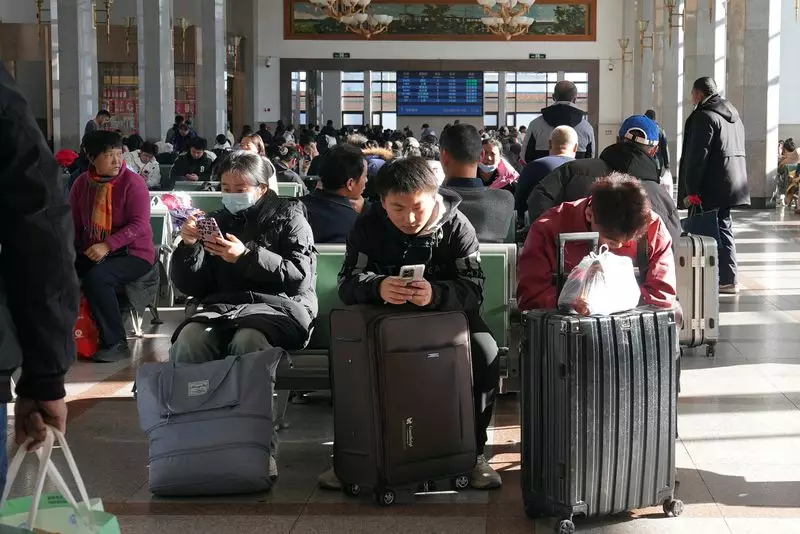
The Lunar New Year is a time of year when families across China come together to celebrate tradition, and this year’s travel rush poignantly underscores the complex emotions of the moment. With millions setting out on journeys to reunite with relatives, the festive spirit remains vibrant despite the economic clouds overhead. The confluence of hope, tradition, and economic uncertainty shapes the narrative surrounding the annual travel rush, which officially commenced this week.
A Journey Rooted in Tradition
The travel season for the Lunar New Year, which spans from January 10 to February 22, has begun in earnest, seen by many as an opportunity to step away from the pressures of daily life. This year’s festivities, culminating in the reunion dinner on January 29, are emotionally significant, as families prioritize these gatherings above all else. The immediate kick-off was exemplified by the departure of a train from Beijing to Hefei just after midnight, symbolizing the start of an intensely busy period where millions are expected to traverse the country.
Train companies predict a staggering volume of 510 million travelers will utilize rail transport, while an estimated 90 million will opt for air travel. Yet the majority, about 80%, are projected to travel by personal vehicles, highlighting the deeply ingrained cultural desire for connection with family, regardless of the hurdles encountered in getting there.
While the spirit of family reunions prevails, the backdrop of China’s economic landscape looms ever-present. The nation, with its population exceeding 1.4 billion, grapples with a post-pandemic recovery that remains fragile. Despite these prevailing concerns, many travelers are dismissing economic gloom, choosing to focus on the positive aspects of their lives. For instance, Wang Zhixu, a 55-year-old professional, expressed a sense of peace and contentment despite the economic downturn, emphasizing a collective national sentiment that prioritizes familial bonds and happiness.
The resilience displayed by travelers also manifests in their increasing willingness to spend on experiences during this festive season, reflected in a notable 50% rise in multi-destination flight bookings compared to last year. Popular tourist destinations such as Harbin, Guangzhou, and Dali draw not only those seeking reunion with families but also holidaymakers looking to relish in the seasonal festivities. This inclination towards travel even amidst economic uncertainty signifies a cultural resilience that is emblematic of the importance placed on familial relationships and rituals.
However, not everyone shares the same optimistic outlook. For young people entering the workforce, the horizon appears cloudier. Youth unemployment reached a staggering 18.8% last August, pushing many recent graduates into uncertain job situations or forcing them to accept lower-paying work or delay their careers through further education. The dissatisfaction among the youth has led to a growing trend of leaving metropolitan areas, as young individuals like 22-year-old Shi Zhenyue express their hope for improved job prospects in the coming year. Her aspirations reflect not just personal ambition but also a broader desire to escape the pressures and uncertainties that accompany urban life.
The preference for a slower pace of living among some young adults, such as 33-year-old He, speaks volumes about shifting priorities. Choosing to return to her hometown after experiencing the pressures of city life, He notes the benefits of a calmer existence, suggesting that the heavy emotional toll of urban competition is prompting a reevaluation of what constitutes happiness.
As China embarks on this Lunar New Year travel season, the spirit of family remains a powerful motivator for millions despite the economic uncertainties that cloud the future. The juxtaposition of traditional celebration and modern challenges reflects a society in transition, where community bonds persist despite the pressures of change. In the face of personal aspirations and economic tribulations, this year’s travel rush captures a moment of profound cultural significance—affirming the enduring power of family ties while revealing the complex emotions of a nation in pursuit of hope and stability.
Ultimately, as travelers embark on their journeys, they navigate not just the roads and railways of China but also the intricate landscape of hopes, dreams, and emotions that shape the essence of the Lunar New Year.