
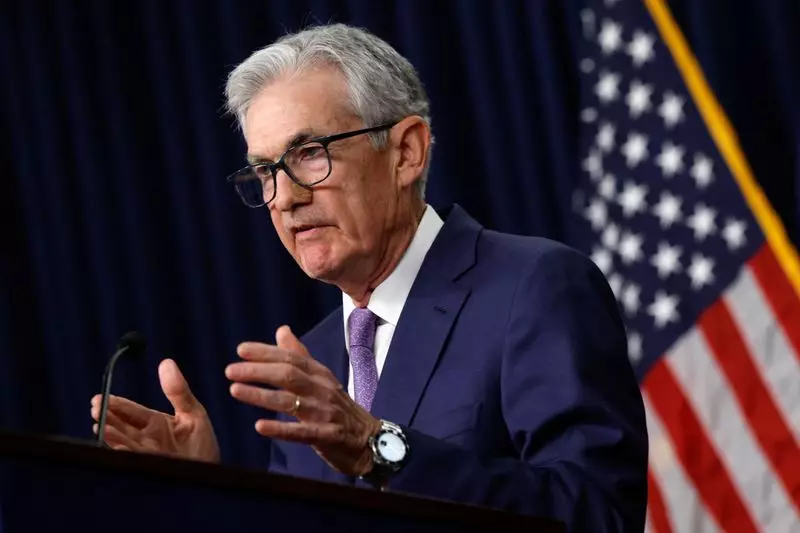
As the United States approaches 2025, the Federal Reserve, under the stewardship of Chair Jerome Powell, is at a complex crossroads. The interplay between maintaining the central bank’s autonomy while navigating the political theatrics of an evolving administration poses significant challenges for monetary policy.
Powell’s role has become intricately tied to the broader implications of policy shifts anticipated under the newly elected administration led by former President Donald Trump. A key aspect of Powell’s challenge is to craft a monetary policy that does not provoke a confrontation with Trump, all while sidestepping the perception of partisanship. The ongoing dynamic has become increasingly evident as Trump’s economic policies take shape. Indeed, right after Trump’s election victory, Powell was clear about the Fed’s commitment to abstaining from speculation regarding future monetary policy impacts stemming from potential policy changes. The mantra, “we don’t guess, we don’t speculate, and we don’t assume,” reiterated by Powell, encapsulates this intent. However, within a month, it became apparent that the Fed’s projections began to reflect anticipations of inflationary pressures linked to Trump’s proposed agenda.
Shifting Projections amid Economic Realities
By cutting rates by a quarter point last week, the Fed completed a full percentage point decrease since September. This movement was a necessary response, yet it emerged against a backdrop of increasing caution reflected in revised forecasts. As the Fed grapples with the implications of Trump’s proposed tariffs and stricter immigration measures, officials have recalibrated their outlook to anticipate only two further rate cuts in the coming year — a significant reduction from earlier predictions. The subtle but important shift in the consensus forecast indicates a growing acknowledgment of inflation risks that could challenge the Fed’s proactive easing measures laid out in September. Analyzing the figures, inflation is forecasted to hover around 2.5% in 2025, up from a previously expected 2.2%.
This calculated hesitation among Fed officials illuminates the dual forces of external economic pressures and internal policy decisions that shape monetary policy. Economists, including Michael Gapen from Morgan Stanley, have noted an apparent hawkish turn during the latest meetings, pointing out a contradiction to the Fed’s previous commitment to refrain from speculating on policies. Despite Powell’s insistence on non-speculation, the adjustment in projected rates and inflation reveals that the Fed is indeed responding to potential challenges rather than adhering rigidly to a neutral stance.
Inflationary Pressures in a Complex Landscape
Former Trump advisors have touted deregulation and energy production increases as potential mitigators of inflation. For instance, Treasury Secretary-designate Scott Bessent outlined on a public platform that price adjustments resulting from tariffs may not lead to inflation if consumer spending remains balanced. Nevertheless, veteran economists argue otherwise; they contend that the backdrop of elevated inflation will require the Fed to act with restraint. JPMorgan’s chief economist, Michael Feroli, emphasizes that the current economic landscape, characterized by rising inflation rather than a decade of low inflation rates, calls for a more nuanced approach rather than a repeat of past practices.
The nexus of economic factors suggests a sensible caution from the Fed. Heightened employment will likely lead businesses to pass increased operational costs onto consumers, which may perpetuate inflationary tendencies. Economist Ray Farris points out that with low unemployment rates, any cost uptick is more likely to be reflected in consumer prices than during periods of economic downturn. This situation further complicates the Fed’s operations as they confront the reality of how swiftly businesses might adjust their pricing in response to economic changes.
As Powell guides the Fed with the specter of Trump’s policies looming large, he must implement a strategy that balances the dual imperatives of independence and responsiveness to inflation threats. The stakes could not be higher; Powell is acutely aware of the risks that accompany unchecked inflation, unlike the previous term during which trade tensions guided rate cuts in an uncertain economic climate. His comments about the Fed’s need to understand the various pathways through which tariffs and policies impact inflation signal a pivot toward deeper analytical engagement with ongoing economic dynamics.
Navigating 2025 will demand a deft balancing act from the Federal Reserve. Powell’s journey toward maintaining the Fed’s integrity while adapting to volatility in the political and economic landscape will largely dictate how monetary policy evolves in this new era. The ability to move cautiously yet decisively amid uncertainties will be essential in shaping an effective economic trajectory for the nation.