
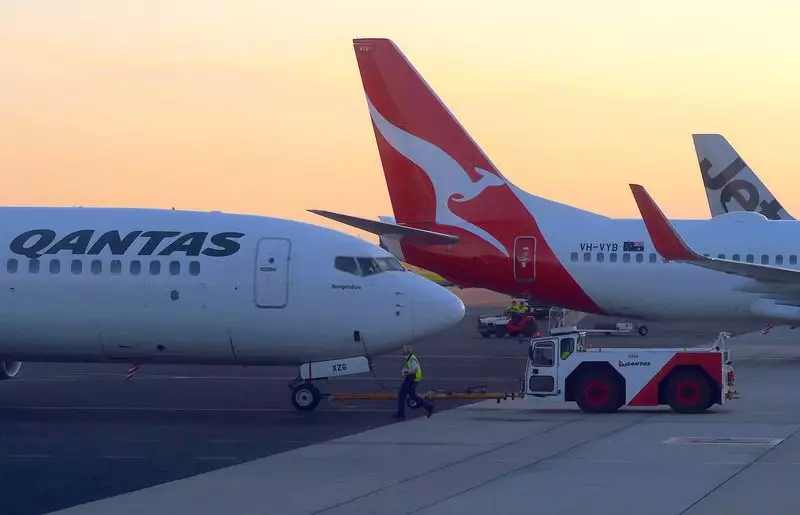
In a significant legal development, Australia’s Qantas Airways has been ordered by the Federal Court to compensate three baggage handlers after their unlawful termination in 2020. This ruling holds implications not only for these individuals but also for a larger group of around 1,700 employees affected by similar outsourcing decisions during the pandemic. The court mandated Qantas to reimburse these workers A$170,000 (approximately $114,000), a decision reflecting the airline’s broader legal troubles stemming from its controversial actions amid the challenges posed by COVID-19.
Judge Michael Lee highlighted the severe impact of the airline’s actions on the lives of the dismissed workers. The awarded damages—to the tune of A$30,000, A$40,000, and A$100,000—were designated as non-economic losses, emphasizing the emotional and psychological toll that the firings took on the employees. The judgment underscored that Qantas’ decision to outsource ground handling operations was not only unlawful but also portrayed an attempt to sidestep industrial action that was rightfully due. This sets the stage for a more extensive consideration of damages across all affected workers, with the awarded figures serving as precedents in those negotiations.
Qantas defended its actions by labeling the sackings as necessary measures to cut costs amidst the financial turmoil caused by the pandemic. The airline argued that the impact of COVID-19 justified the outsourcing of ground handling operations, a move that was proven to be both legally and ethically questionable. Judge Lee noted that if the airline had opted for lawful outsourcing practices, it would have still enabled it to achieve considerable savings, further undermining Qantas’s position that such actions were imperative.
This ruling not only signifies a loss in court for Qantas but also raises questions about the company’s practices and ethical considerations during a crisis. The airline is grappling with significant reputational damage due to various issues, including a recent settlement of A$120 million for supposedly selling tickets on already canceled flights. Additionally, Qantas faced criticism for seeking to restrict competition from rival airlines. These controversies combined have culminated in mounting pressure on the airline to rectify its past missteps.
Following the court’s ruling, Qantas CEO Vanessa Hudson expressed regret on behalf of the company and acknowledged the necessity for reform within the organization. Hudson’s comments underlined the company’s commitment to learning from these events moving forward. The court has scheduled a follow-up for November 15, urging both Qantas and the Transport Workers Union to engage in discussions regarding a comprehensive compensation plan for all the dismissed employees.
The court’s ruling presents a pivotal moment for Qantas as it reevaluates its operational strategies and employee relations. The airline has an opportunity to demonstrate its commitment to change, ensuring that its workforce feels valued and respected. As the airline works through its legal obligations, it is crucial for Qantas to uphold its promise of transformation to rebuild trust with its employees and customers alike. The coming months will be critical in shaping the airline’s future and its relationship with its labor force.