
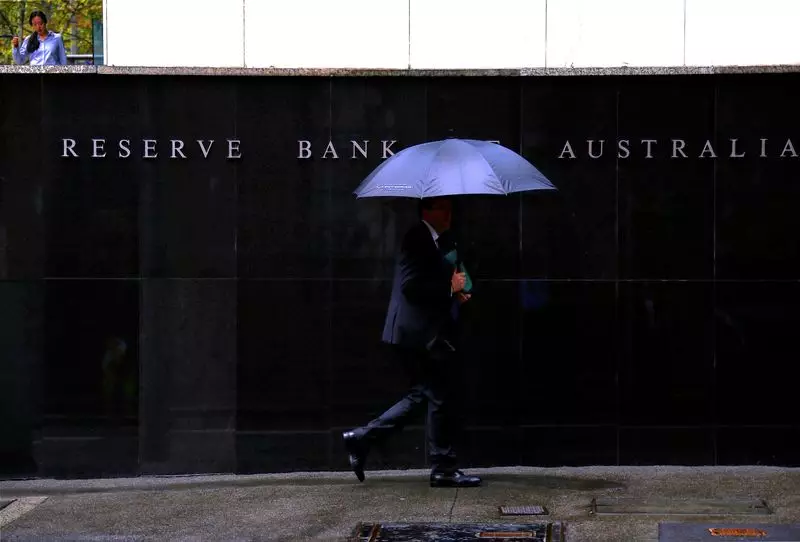
As Australia navigates post-pandemic recovery, its economic landscape paints a picture marked by resilience and intricacies. Recent data reports a consumer price inflation rate that has neared the Reserve Bank of Australia’s (RBA) target range, registering at 2.8% last quarter. This milestone is the first instance in three years where inflation has fallen under the RBA’s designated goal of 2-3%. However, beneath this promising façade lies the persistent challenge of core inflation. Stripped of fluctuating components, core inflation remains firmly positioned above the ideal marks, compelling the RBA to adopt a tempered approach in monetary policy.
The RBA has maintained the cash rate at 4.35%, emphasizing a cautious strategy amidst a backdrop of strong economic activity. Historically, the bank’s post-COVID tightening measures displayed a robust but measured increase in interest rates, elevating them by 425 basis points. This relatively lower peak compared to global counterparts reflects a unique RBA philosophy that intertwines monetary policy with job creation, recognizing that employment stability plays a crucial role in economic health.
The Employment Market’s Resilience
A prime factor influencing the RBA’s current stance is the labor market’s steady performance. With the unemployment rate hovering between 4.0% and 4.2% since April, indicators reveal that the job market remains robust, absorbing shocks and supporting consumer spending. Furthermore, the jobs landscape releases signs of stability that favor the RBA’s wait-and-see approach. Such employment metrics are pivotal, providing the RBA with the confidence to maintain elevated interest rates without inciting widespread economic distress, contrasting with the aggressive rate cuts anticipated by various sectors in other developed nations.
In a recent survey conducted from October 30 to 31, economists unanimously projected that the RBA would keep the official cash rate unchanged during its upcoming two-day policy meeting on November 5. Responses emphasized a strategic move towards a balanced narrative, hinting at possible shifts in the monetary dialogue without actual rate changes. Financial experts, including Craig Vardy from BlackRock, conveyed the sentiment that expectations align closely with core inflation trends, suggesting that until inflation decisively returns to the desired band, rate cuts may be postponed until early 2025.
Major banking institutions, including ANZ, CBA, NAB, and Westpac, share a consensus regarding the RBA’s firm hold on interest rates throughout 2024, with predictions of an initial rate reduction in February 2025. Of the economists surveyed, a significant portion forecasts a conservative yet gradual easing of monetary policy, expecting a 25 basis point cut that would bring the rate to 4.10% at the onset of 2025. Interestingly, substantial differentiation exists between the forecasts for Australia and those anticipated for the U.S., with markets expecting the Federal Reserve to advance rate cuts at a more accelerated pace.
The conversations surrounding inflation and monetary policy do not merely hinge on immediate impacts. Experts like My Bui from AMP indicate that core inflation properties, which have not yet settled within target bands, may deter the RBA from substantial rate adjustments. A specific forecast anticipates that until mid-2024, core inflation dynamics may not align favorably, retaining the RBA in a low-aggressive approach. Furthermore, potential rate cuts are viewed as a step towards normalizing monetary policy, which, in context, suggests a targeted reduction towards levels just above 3%.
As central banks, including the RBA, maneuver through contemporary challenges posed by inflation and economic recovery, their strategies will profoundly shape both domestic markets and international perceptions. The divergence in approaches, especially in comparison to the United States, may lead to notable implications for foreign exchange markets. The Australian dollar, which has experienced fluctuations alongside these monetary decisions, is expected to stabilize post-rate adjustments, potentially regaining losses incurred throughout the year.
Overall, the RBA’s careful navigation exemplifies a commitment to striking a balance between fostering economic growth and managing inflation, ensuring Australia remains economically resilient in an uncertain global framework. Looking ahead, maintaining a vigilant yet adaptable policy approach will be essential for sustaining growth and securing the nation’s economic future.