
Recent analyses suggest that the South Korean economy has navigated its way back to growth after experiencing a slight contraction in the previous quarter. Following a 0.2% decline in the April to June period, forecasts indicate an anticipated 0.5% growth in the third quarter, driven primarily by a surge in exports. This rebound, while encouraging, underscores the complex interplay between external and internal economic factors, particularly the mounting pressures from rising borrowing costs which have stifled domestic consumer demand.
Exports have been a crucial lifeline for South Korea, buoying its economy in what have otherwise been challenging times. Data reveals that export growth averaged nearly 10% throughout the year leading up to September, largely fueled by burgeoning semiconductor demand from the United States. However, recent months have illustrated a cooling trend in export growth, primarily due to a slowdown in trade relations with key partners, including China, Japan, and India. This situation prompts an analysis of the critical need for South Korea to diversify its export markets to sustain growth momentum in an increasingly tumultuous global trading environment.
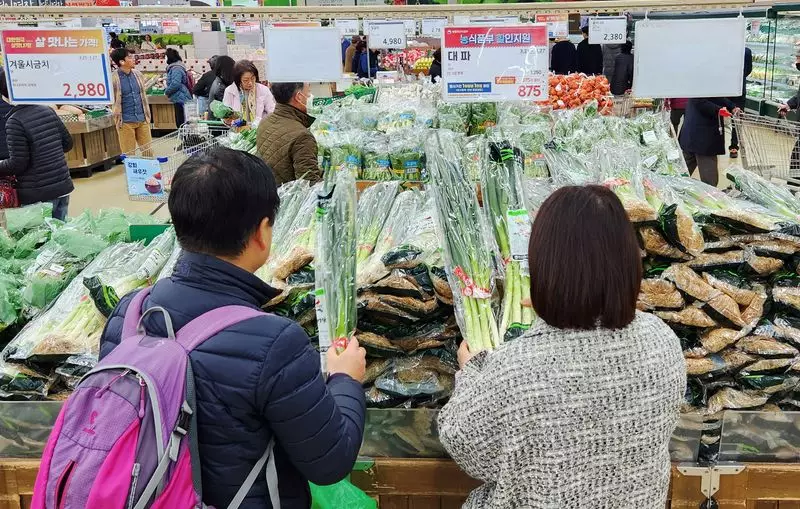
While exports displayed resilience, domestic demand painted a more somber picture. High-frequency economic indicators such as retail sales and construction activity have revealed sluggishness, suggesting that many households are grappling with financial pressures. South Korea’s household debt remains worryingly high—one of the highest ratios in the developed world—making consumers cautious regarding spending. As a response to this dire situation, the Bank of Korea (BOK) recently implemented a rate cut aimed at rekindling demand. However, with expectations of only modest adjustments moving forward, the outlook for bolstered domestic consumption remains tepid.
The BOK’s recent decision to lower its policy rate from a 15-year high represents a strategic attempt to stimulate economic activity. Nevertheless, analysts remain skeptical about the frequency and impact of further cuts in the near future, especially given ongoing concerns regarding the stability of the housing market. The cumulative effect of regulatory measures aimed at controlling household debt, juxtaposed with pressures emanating from an uneven recovery in China and softening U.S. demand, suggests that South Korea’s economic trajectory is fraught with uncertainty.
Despite these challenges, projections indicate that South Korea’s economy might average a growth rate of around 2.4% for the year. This aligns with the revised forecasts from the central bank, reflecting a cautious yet cautiously optimistic perspective on the economy’s resilience. As policymakers grapple with balancing export growth against domestic challenges, the road ahead requires a nuanced approach focusing on long-term economic stability rather than short-term fixes.
While South Korea’s economy appears to have stabilized and returned to growth, the underlying issues of domestic demand and external dependency reflect a complex economic reality. Transitioning to a more resilient economic structure may be imperative for sustained growth in a world characterized by unpredictability.