
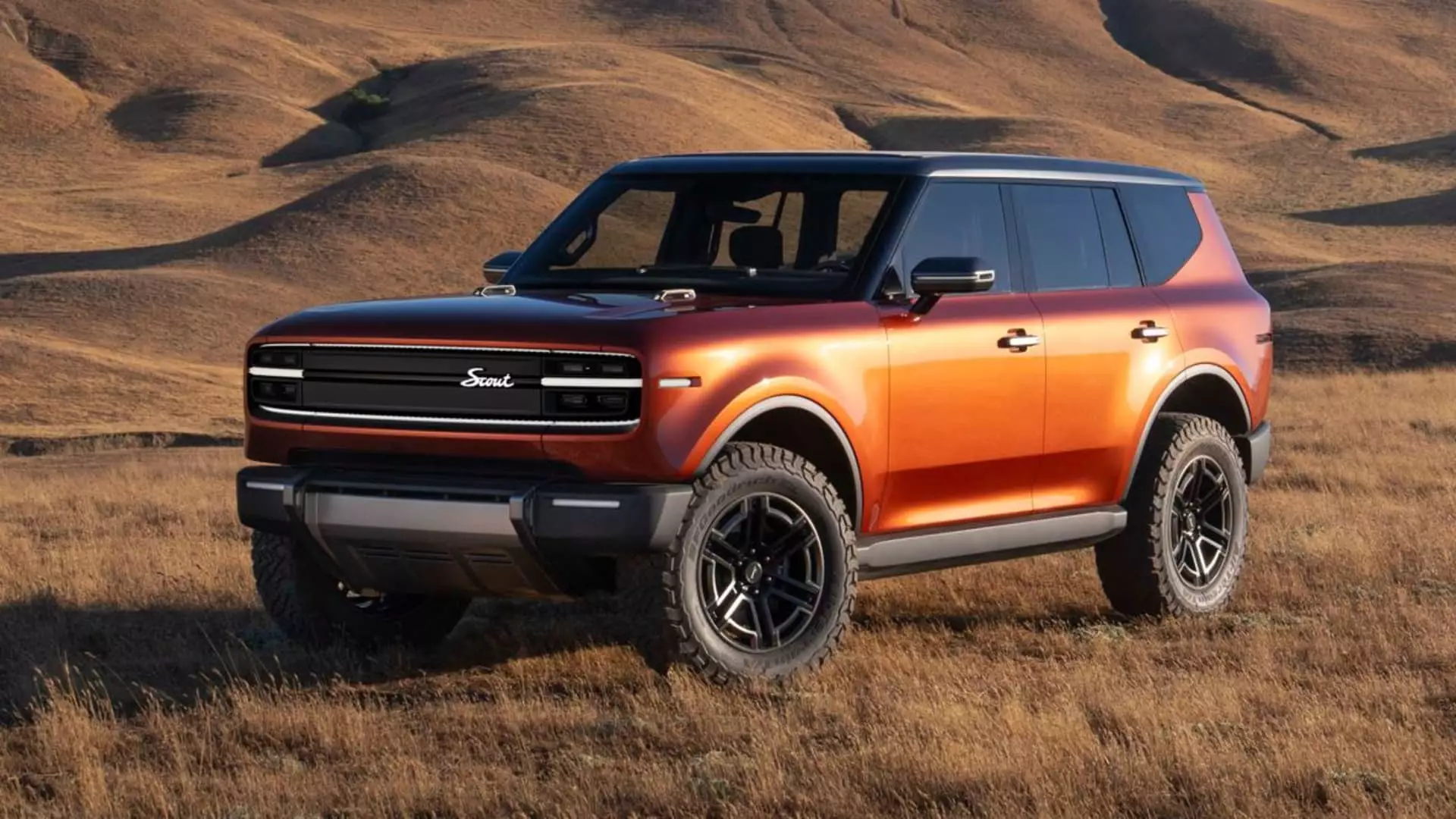
In a significant announcement, Scout Motors unveiled its debut lineup of electric vehicles (EVs), diversifying its offerings to include a revolutionary category of plug-in hybrid electric vehicles (PHEVs) known as extended-range electric vehicles (EREVs). Once a prominent American brand from 1961 until 1980, Scout’s resurgence under the auspices of Volkswagen highlights not just an evolution in automotive technology but also a strategic pivot in a rapidly changing market. This shift responds to realities that include both consumer adoption rates of EVs that aren’t meeting expectations and the financial pressures associated with production costs.
Scott Keogh, the CEO of Scout Motors and a veteran in the automotive sector, recently expressed the company’s willingness to adapt its strategy in response to current trends. “Being a startup that moves quickly, we can pivot. The pivot that we made a number of months ago into offering range extender definitely was a smart play,” he remarked. This sentiment elucidates the essence of agility in business, particularly in an industry undergoing transition fueled by technology and consumer preferences.
Scout’s new EREVs are distinct from traditional internal combustion engine vehicles. They feature electric motors, battery cells, and an internal combustion engine that serves as a generator, providing electricity to the engine when the battery charge diminishes. This hybrid approach aims to address lingering consumer fears regarding range and performance, making electric mobility more accessible to a broader audience. Keogh articulated this strategy, stating, “range extender sets it up as an EV car, so it introduces people to electrification, yet it has a super smart, let’s say, ‘backup plan.’”
The inclusion of EREVs not only mitigates risks associated with fluctuating demand for purely electric vehicles but also equips potential buyers with the reassurance that they won’t be stranded if charging infrastructure is inadequate. This thoughtful approach marks a departure from Scout’s initial strategy of focusing solely on EVs, demonstrating a clear understanding of consumer psychographics in today’s automotive climate.
A Strategic Positioning in the Market
Scout’s intention to penetrate a significant segment of the U.S. vehicle market is underscored by its decision to focus on the lucrative full-size pickup truck and large SUV categories, projected to capture roughly 40% of the market’s profitable space. The company operates amidst a landscape where established competitors like Ford and GM are confronting hurdles stemming from overly ambitious timelines and market volatility. While many automotive startups grapple with high deficits in production, Keogh expressed confidence in Scout achieving operational profitability within its first full calendar year of production.
The plan to set up a $2 billion factory in South Carolina with an annual production capacity of 200,000 vehicles signifies a commitment to scaling operations efficiently. The integration of battery technology through a joint venture with VW’s battery cell suppliers further strengthens Scout’s viability. As high-production costs, primarily driven by battery manufacturing, continue to undermine many EV manufacturers, Scout’s positioning offers a potentially sustainable path forward.
With the unveiling of the Traveler SUV and Terra pickup truck, both set to arrive in 2027, Scout is poised to engage the consumer market on multiple fronts. The vehicles are slated for pricing within the range of $50,000 to $60,000, making them competitive options in their class. Interestingly, Scout plans to sell directly to consumers rather than through established dealer networks, thereby enhancing customer interaction and potentially improving profit margins by removing intermediary costs.
Both models are designed with updated aesthetics that resonate with contemporary preferences while retaining a nod to the nostalgic lineage of the Scout brand. Features such as expansive horizontal screens and premium interior materials demonstrate an acute awareness of the consumer’s desire for modern technology coupled with high-quality craftsmanship.
Challenges and Opportunities in the EV Landscape
Although optimism is high, Scout Motors enters an electric vehicle market that remains in a state of flux. Sales of electric trucks and SUVs accounted for a mere fraction of overall vehicle sales, yet a sharp upturn in quarterly growth rates suggests a burgeoning interest. Many major automakers are entering this space at once, resulting in an increasingly competitive landscape where differentiation becomes essential for success.
Keogh is aware of these challenges but believes that Scout’s unique brand narrative, pricing strategy, and thoughtful product positioning can carve out a niche amid competition from established legacy automakers and new startups alike. “Can we consider some point in the future sizing down? Absolutely,” he said, highlighting the ongoing assessment of market needs as pivotal for sustained success.
Conclusively, Scout Motors is not merely following the trend towards electrification; it’s actively reshaping its business model to ensure relevance and profitability in an extensive automotive transformation. Its strategy of combining EREVs with direct-to-consumer sales and advanced manufacturing positions Scout to leverage potential gains while also addressing consumer reservations about the viability of electric mobility. The evolving narrative of the Scout brand is one to watch closely as it seeks to redefine American automotive culture in the 21st century.