
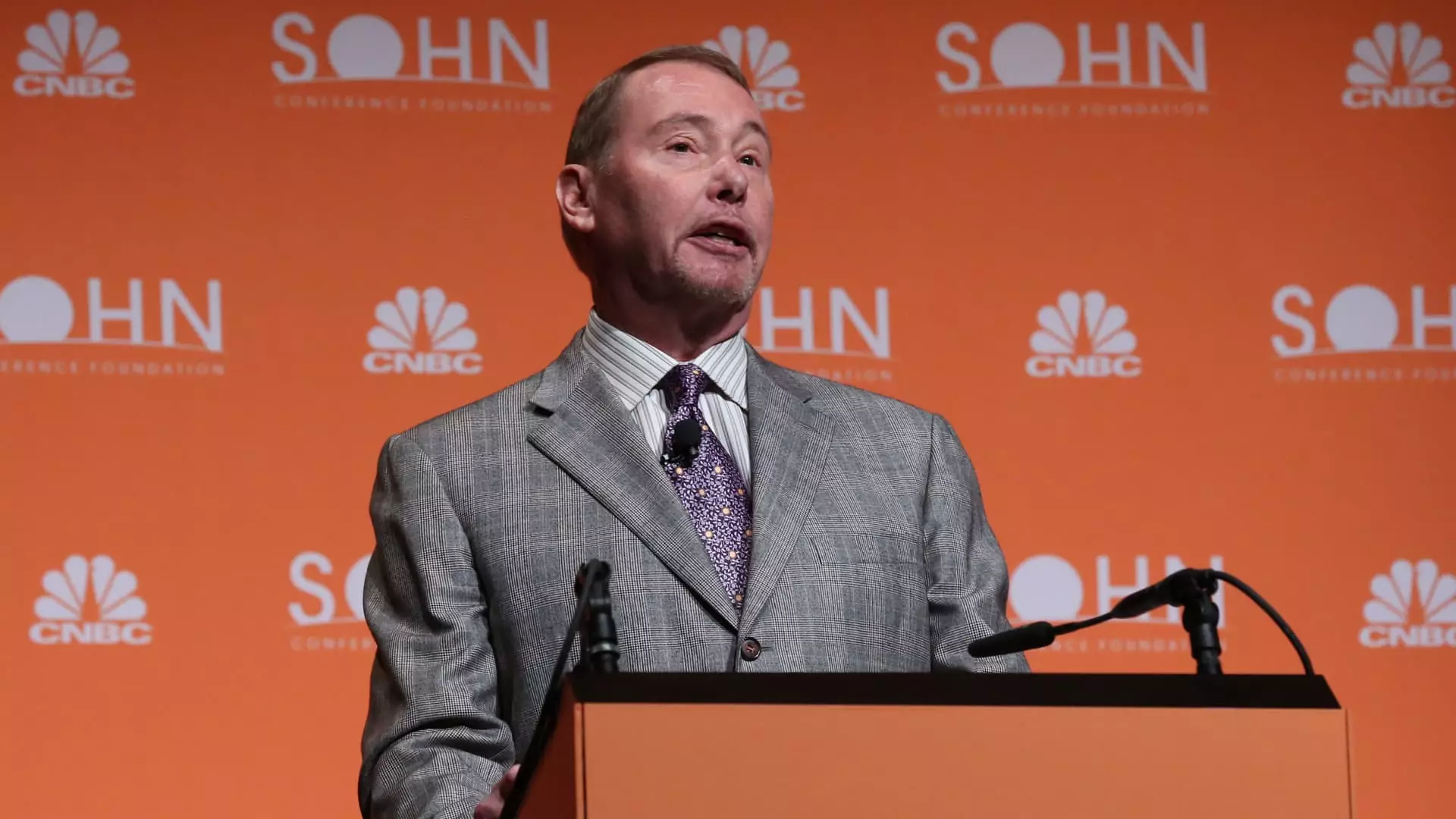
In the ever-evolving landscape of U.S. politics and economics, the potential shift in power dynamics can have significant ramifications on financial indicators, particularly interest rates. Jeffrey Gundlach, CEO of DoubleLine Capital and a respected figure in the fixed-income investment sector, has raised critical points regarding what could follow should Republicans gain control of the House. The political situation is pivotal; with a Republican-led House, greater legislative freedom could allow for increased government spending, which in turn could necessitate a higher borrowing capacity and inflate interest rates.
In assessing Gundlach’s insights, it becomes evident that if Republicans realize a governing trifecta alongside a Trump presidency, the resultant economic policies may pivot towards aggressive fiscal strategies. The concern raised is that such a shift would lead to increased Treasury issuance in order to fund expanding budgetary needs, thereby exerting upward pressure on bond yields. The Federal Reserve’s role is also worth noting—how they respond to these developments could either mitigate or exacerbate potential fluctuations in the interest rates.
Current Economic Climate and Fiscal Responsibilities
As of the close of fiscal 2024, the federal budget has already revealed troubling news: a deficit surpassing $1.8 trillion, with significant allocations directed towards financing costs tied to an astronomical $36 trillion debt. Gundlach’s apprehension reflects a broader sentiment among investors regarding the sustainability of fiscal strategies in light of these challenges. The looming question is whether the proposed tax cuts associated with a Trump administration would propel the deficit further into uncharted territories.
Moreover, with anticipation of the Federal Reserve potentially implementing further rate cuts, the stakes are already high. Traders expect not only a continuation of cuts in the immediate future but also across subsequent years. In this context, Gundlach presents a dichotomy—while increased government expenditure may be consonant with economic growth, it simultaneously raises the specter of elevated interest rates that could disproportionately affect long-term financial stability.
The Potential for Economic Growth Amidst Uncertainty
Despite the foreboding fiscal picture painted by Gundlach, he also posits an interesting counterpoint: the Trump administration’s policies may, paradoxically, decrease the likelihood of a near-term recession. The reasoning is that the proposed pro-cyclical stimulus measures and tax cuts might invigorate economic activity sufficiently to stave off downturn fears, thus reshaping the traditional narrative around spending and debt accumulation.
The contention that strategic fiscal policies could simultaneously create growth while addressing structural deficits sits at the heart of the current discourse. However, the challenge rests in ensuring that such policies do not catalyze runaway inflation or unsustainable national debt levels. The balance of ensuring fiscal responsibility while bolstering economic growth becomes more crucial as potential legislative outcomes emerge.
As we traverse the uncertain terrain ahead, the financial community must remain vigilant to the interplay between political developments and economic policies. Gundlach’s observations encapsulate the complexities of this relationship, emphasizing the necessity for prudent financial management in an environment ripe with both opportunity and peril. Ultimately, the ramifications of legislative outcomes are not merely theoretical; they wield real-world consequences that could shape the financial landscape for years to come.