
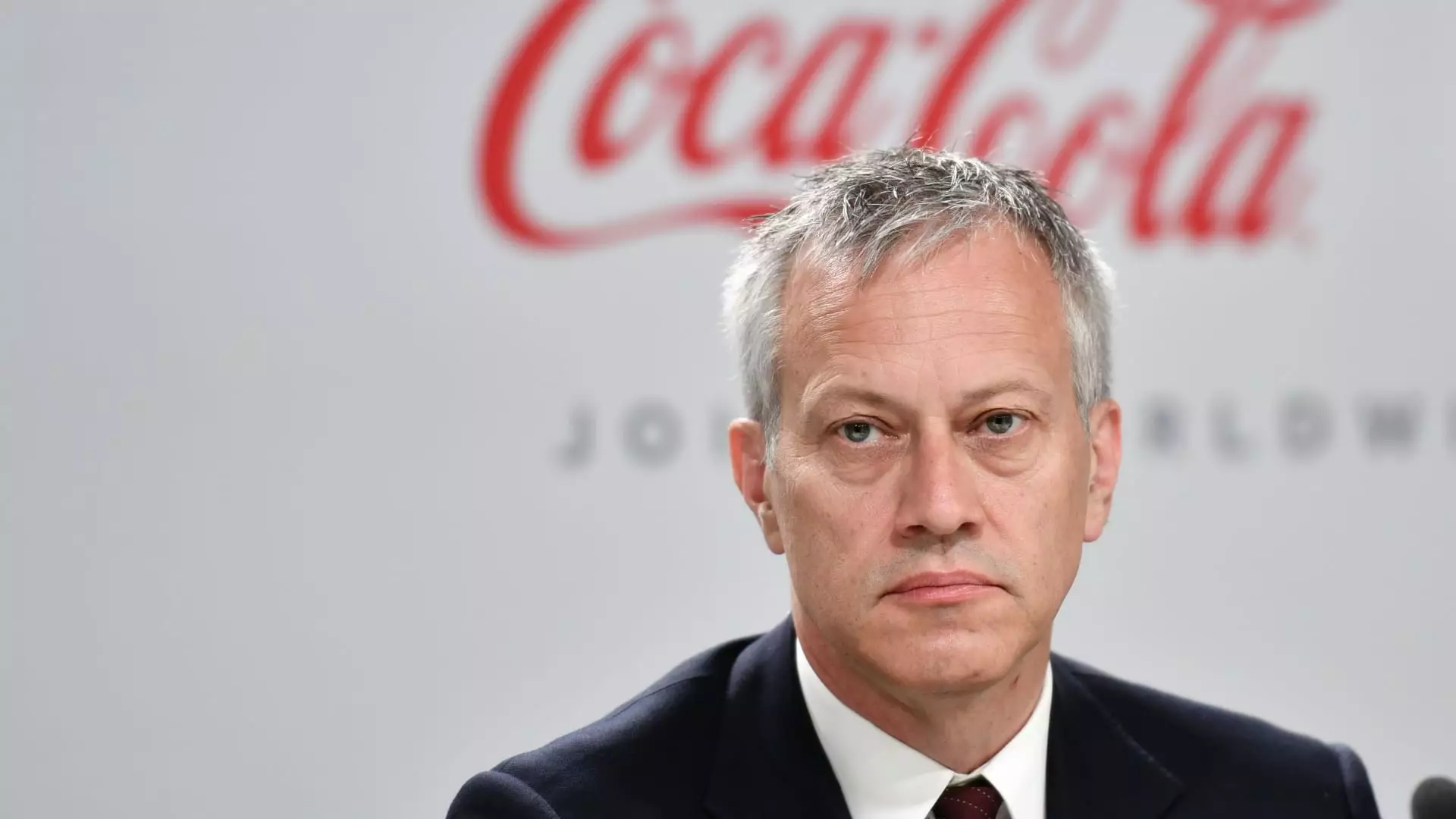
The symbiotic relationship between Coca-Cola and McDonald’s has been a cornerstone of the fast-food and beverage industry for nearly 70 years. Both companies have thrived on this partnership, which has significantly contributed to their market dominance. However, recent challenges, such as E. coli outbreaks linked to McDonald’s menu items, raise questions about the potential repercussions for Coca-Cola. Despite these challenges, Coca-Cola CEO James Quincey remains optimistic about the future, asserting that the outbreak will not have a pronounced impact on their sales.
Recent economic trends indicate that consumer spending at restaurants has slowed down significantly. This decline in consumer confidence and expenditure poses a threat not only to fast-food chains like McDonald’s but also to their associated suppliers, including Coca-Cola. During these uncertain times, restaurants have been compelled to resort to aggressive discount strategies to attract customers. The current challenges underscore a crucial theme: how resilient partnerships can weather the storms of unforeseen crises.
The Immediate Response to the E. Coli Outbreak
Following an alarming announcement from the Centers for Disease Control and Prevention (CDC), which linked an E. coli outbreak to McDonald’s Quarter Pounder burgers across ten states, both companies have had to act quickly to mitigate damage. The situation escalated with reports of 49 illnesses and a tragic fatality, influencing McDonald’s decision to withdraw the Quarter Pounder from select menus and remove slivered onions from their supply chain. The potential culprits identified—fresh beef patties and onions—highlight the complex and often fragile nature of food safety in the fast-food industry.
In the face of this crisis, McDonald’s has publicly expressed its commitment to ensuring customer safety. Joe Erlinger, President of McDonald’s USA, emphasized that quick actions had been taken to protect consumers, reinforcing the importance of transparency and responsiveness in crisis management. However, the broader implications for Coca-Cola remain an area of scrutiny.
Coca-Cola’s Strategic Positioning Amid Challenges
Quincey’s assurance that Coca-Cola does not foresee significant repercussions from this outbreak reflects not only confidence but also a strategic assessment grounded in historical data. Despite the intertwined fates of the two corporations, Coca-Cola’s diverse product offerings and solid brand equity offer a buffer against the volatility of fast-food sales. While McDonald’s may face immediate repercussions in terms of customer traffic and sales, Coca-Cola benefits from a broader customer base, including various retail outlets, restaurants, and international markets.
Moreover, Coca-Cola’s proactive involvement in co-marketing initiatives underscores its commitment to maintaining strong ties with McDonald’s. The company recently contributed marketing funds aimed at enhancing the appeal of value meals, showcasing the mutual dependency that sustains both entities.
In the backdrop of the E. coli outbreak, reports of Coca-Cola’s third-quarter earnings exceeded Wall Street’s expectations, largely attributed to strategic pricing rather than volume increases. This reflects a broader trend where companies are seeking to enhance revenue through price adjustments rather than relying on customer spend increases. However, even as Coca-Cola’s financial performance impresses, market reactions show volatility, with shares experiencing a drop amid growing uncertainties related to consumer behavior and broader economic conditions.
Coca-Cola’s ability to navigate challenges while leaning on its partnership with McDonald’s could very well serve as a model for resilience in the larger corporate landscape. The shifts in consumer sentiment, spurred by external crises, demand adaptability and innovation—traits that both companies have historically exemplified.
As the fast-food industry grapples with the ramifications of health and safety concerns, Coca-Cola stands at a pivotal crossroads. The outcome of the E. coli outbreak may offer implications not solely limited to McDonald’s; it serves as a reminder of the intricate relations that define brand partnerships in today’s consumer landscape. The success or failure of these partnerships in navigating crises may ultimately dictate their future trajectories. For now, Coca-Cola’s confidence amid difficulties reflects a determined outlook in an ever-changing market.