
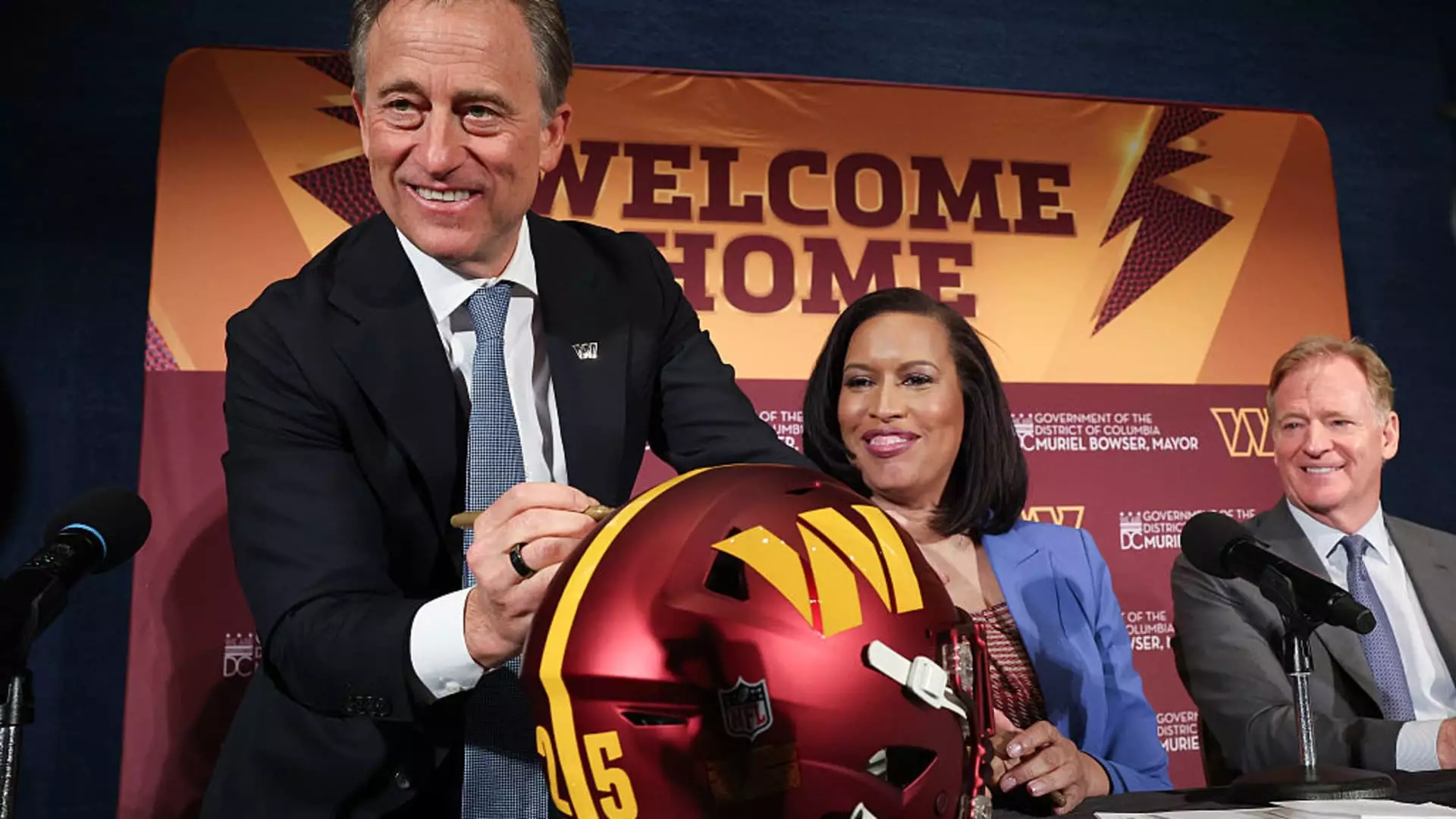
In recent years, the meteoric rise of private equity titan Josh Harris exemplifies the growing dominance of conglomerates in the sports industry. Harris’s HBSE empire, with stakes spanning the NFL, NBA, NHL, and Premier League, appears to be a symbol of successful wealth accumulation. Yet, beneath this facade lies a complex web of inflated valuations and strategic opacity. The narrative that private ownership inherently holds more value than their public counterparts seems convincing at first glance but is fundamentally flawed upon closer scrutiny. The tendency to keep these assets private isn’t merely about privacy; it is a calculated maneuver to shield these assets from market reality, creating an illusion of immense worth that isn’t always reflected in actual market data. Their valuation figures, often soaring into the billions, are less a reflection of genuine market value and more a testament to the power of narrative and exclusivity in shaping perceptions.
Privacy as a Strategic Tool, Not a Necessity
Harris’s assertion that public markets undervalue sports teams aligns with a broader tendency among elite owners to favor privacy over transparency. While he claims that public listings perish under valuation pressures, this position conveniently overlooks systemic advantages private ownership confers. By remaining in the shadows, owners like Harris continue to dictate terms, dividend the true worth of their assets, and manipulate perceptions to serve their interests. It’s a classic case of perception management—highlighting unduly high private valuations to reinforce their relevance and intimidating opponents or investors with the illusion of unmatched market value. Conversely, public markets, with their strict transparency and valuation metrics, threaten to expose the fragility of these inflated figures, potentially destabilizing their carefully cultivated images.
The Public Market Dilemma: Why Most Elite Clubs Remain Private
Harris articulates a common belief that public markets are unsuitable for sports franchises, citing long-term control and flexibility as benefits of private ownership. While partially valid, this reasoning reveals a deeper strategic purpose: keeping these valuations opaque and hard to challenge. The few publicly traded sports assets, such as Madison Square Garden, illustrate the risks well—trading below their perceived worth and exposing vulnerabilities. The reluctance isn’t purely about control but also about maintaining a monopoly on narrative, preventing market valuation from undermining the ego-driven prestige of these clubs. Furthermore, the argument that public companies have struggled to attain true value underscores the manipulation at play: the true power lies in limiting free-market assessment and cultivating an aura of invincibility through controlled private narratives.
The Illusion of Long-Term Investment and Loyalty
Harris’s remark about long-term investments—like the NFL’s new minority stake rules—misses the critical point: these are strategic moves designed to solidify control and inflate perceived stability rather than genuine investment in sustainable growth. Private equity’s traditional focus on control and short-term exit strategies clashes fundamentally with sports ownership’s long-term romanticism. Harris’s assertion that these stakes help owners think long term is a smokescreen; in reality, it’s a method of consolidating power under the guise of strategic patience, all the while inflating franchise values through carefully curated narratives. The move to go public would threaten this delicate balance, forcing owners to reveal the volatile and inflated core of their valuation models. That risk—exposing the hollow foundation of these valuations—is precisely why the majority of sports assets remain shrouded in private status.
The Future of Sports Ownership: Power, Perception, and Reality
While Harris dismisses the idea of taking HBSE or similar conglomerates public, expecting valuations to fall short of private estimates, this stance is more about protecting a carefully constructed image than about practical finance. Once in the public domain, these assets are subject to market scrutiny that could reveal discrepancies and undermine the narrative that has long served elite owners. Their strategic silence and refusal to embrace public markets showcase a desire not for transparency or genuine value demonstration but for control—over perceptions, over assets, and ultimately, over the sports industry’s cultural and economic narrative. If anything, Harris’s approach highlights a broader industry obsession with maintaining an aura of exclusivity—an illusion that keeps the real limits of value hidden behind layers of strategic obfuscation. This isn’t a simple matter of financial prudence; it’s a sophisticated manipulation of perception designed to sustain an elite league of owners wielding disproportionate influence over sports and their fans alike.