
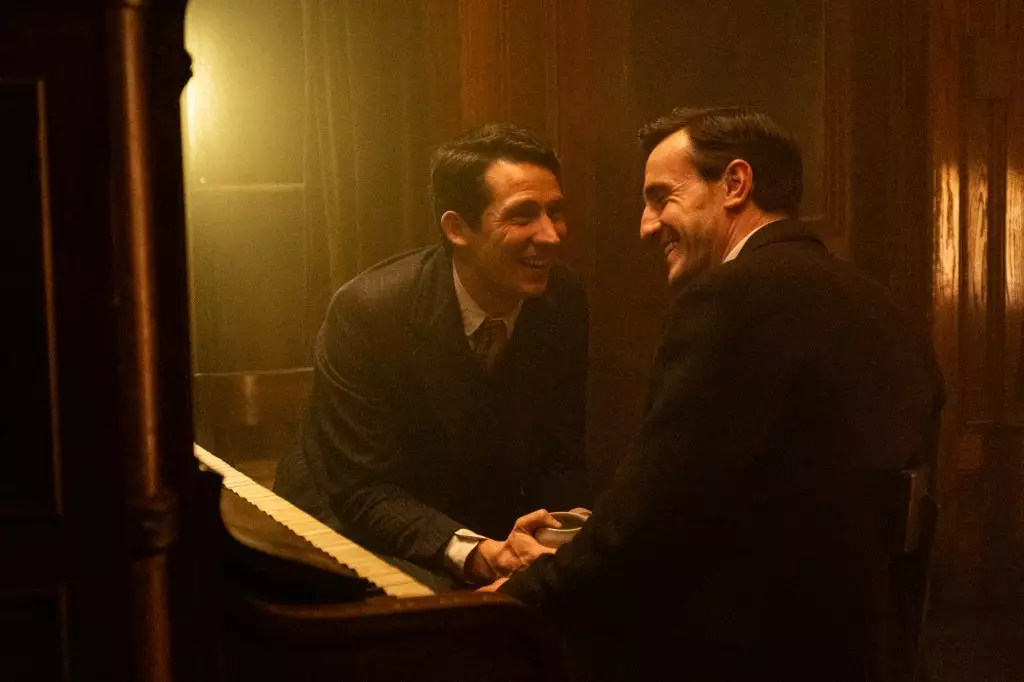
In recent weeks, the indie film landscape has experienced a noticeable slowdown, an outcome largely anticipated during this pre-award season lull. While major studio releases continue to dominate headlines, smaller, independent productions struggle to carve out significant space. This trend not only reflects market saturation but also highlights the increasing challenges faced by indie creators in maintaining visibility and audience engagement amid the noise of blockbuster and franchise dominance. The recent release of Oliver Hermanus’ *The History of Sound*, for example, demonstrates modest success, managing a total gross of around $439,000 after a limited release expansion. However, such figures pale in comparison to studio-backed blockbusters, illustrating the uphill battle for indie films to sustain momentum.
The Market Dynamics Favoring Mainstream Hollywood
The marketplace is increasingly skewed toward well-capitalized studio films that command wide audiences and robust marketing resources. While indies like *The Senior* and *Sight & Sound Presents: NOAH!* show promise with solid opening weekends and high audience scores, they remain outliers in a system that prioritizes mass appeal over niche storytelling. Notably, these smaller productions often rely heavily on critical acclaim and festival buzz to offset limited distribution channels. The limited cinematic runs of Sundance premieres such as *Predators* and *Peacock* reveal a cautious and calculated approach: they perform well within specific arthouse venues but struggle to break into the broader national consciousness. This dynamic not only marginalizes innovative voices but also restricts cultural diversity within mainstream cinema.
The Cultural Cost of Market Consolidation
The decline of indie films signifies more than an economic pattern—it signals a threat to cultural pluralism. As mainstream Hollywood continues to focus on franchise sequels and blockbuster spectacles, the rich tapestry of storytelling that indie films often provide risks fading into obscurity. Films that explore complex social issues or feature diverse perspectives are increasingly confined to art houses or niche streaming platforms. The limited theatrical presence of critical favorites underscores a problematic trend: audiences are deprived of nuanced narratives that could broaden their understanding of different experiences and worldviews. This cultural narrowing not only stifles creative innovation but also undermines the vital role of cinema as a mirror of society’s multifaceted realities.
Implications for Future Cultural and Creative Innovation
If the current trajectory persists, the loss of indie cinema’s vibrancy will have long-term consequences for cultural innovation. Without the support and visibility needed for independent storytellers, the industry risks becoming homogenous and less reflective of societal complexities. A diverse indie scene often acts as a breeding ground for fresh ideas, unconventional storytelling techniques, and marginalized voices—elements essential for a healthy, dynamic cultural landscape. The economic struggles faced by indies in an increasingly consolidated market threaten to curtail this vital incubator of creativity. As audiences, we stand to lose not just artistic richness but also the potential for cinema to challenge, inspire, and expand societal conversations beyond the confines of profit-driven blockbuster culture.